


In this episode of Living Dharma, Shoukei Matsumoto sits down with Toryo Ito, a Rinzai Zen monk and vice-abbot of Ryosokuin, a temple in the Gion district of Kyoto with six hundred years behind it. He has led more than two hundred thousand people in zazen, and has opened the temple’s rooms to contemporary artists.
The conversation was recorded on a rainy morning, in a room that opens onto the garden. Toryo describes what visitors from abroad are looking for when they come to sit in Kyoto. Then he goes back to his first task after returning from the training monastery, which was to sort the scrolls, screens and ceramics kept in the temple storehouse. Everything now called heritage, he realized, had been contemporary work in its own time. That is where his phrase “Living Zen” comes from.
He speaks about leading meditation as something closer to fermentation than to instruction. You prepare the space, you care for it, and then the outcome is not yours to control. In his tradition, karma faces the future rather than the past, because today’s action is a seed. And after years of sweeping the same monastery floors, he found that the wood is a slightly different temperature each morning.
In Japanese, the word for Buddha, hotoke, sits close to the word for loosening, hodokeru. That is much of what this conversation is about.
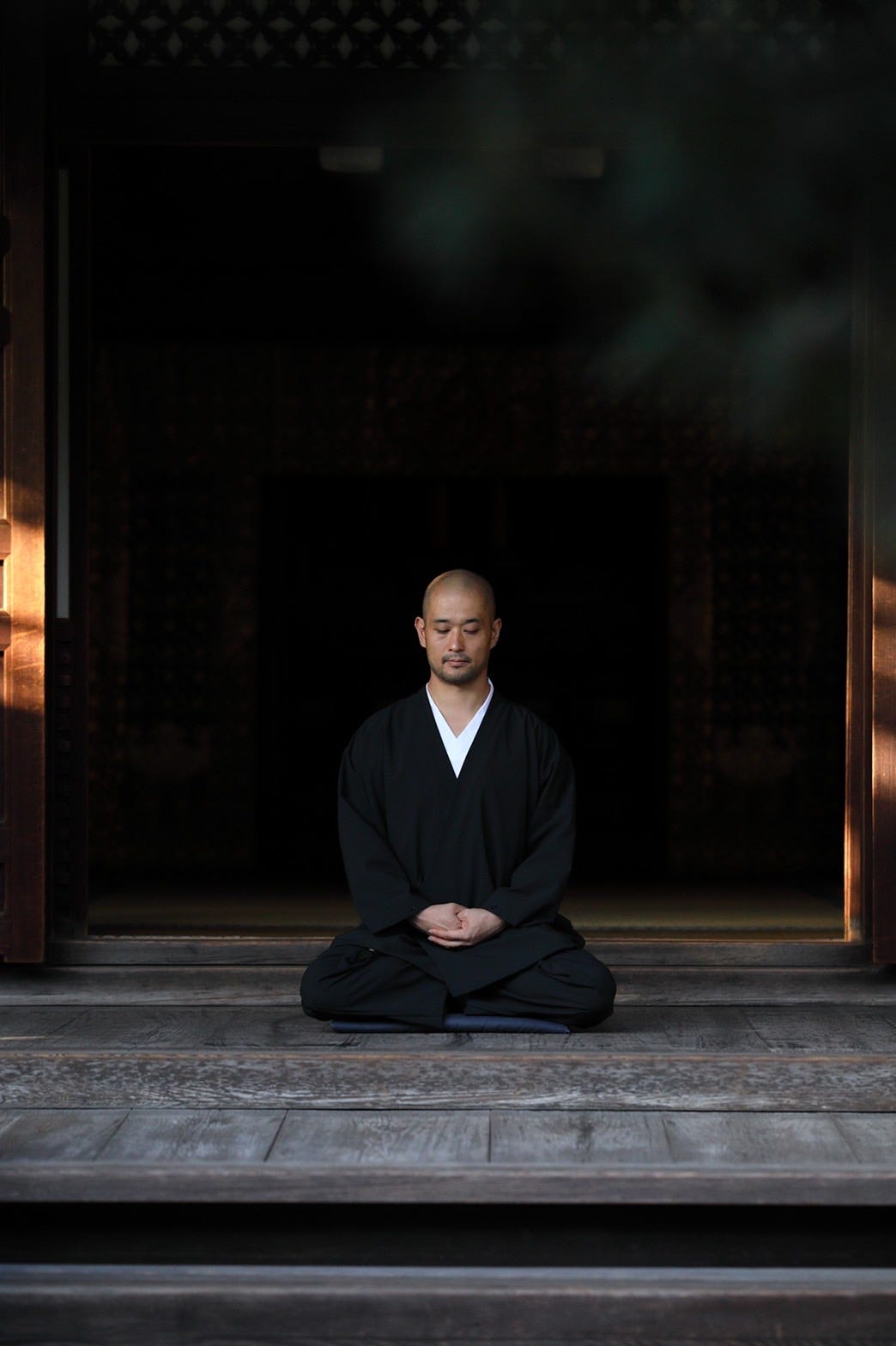
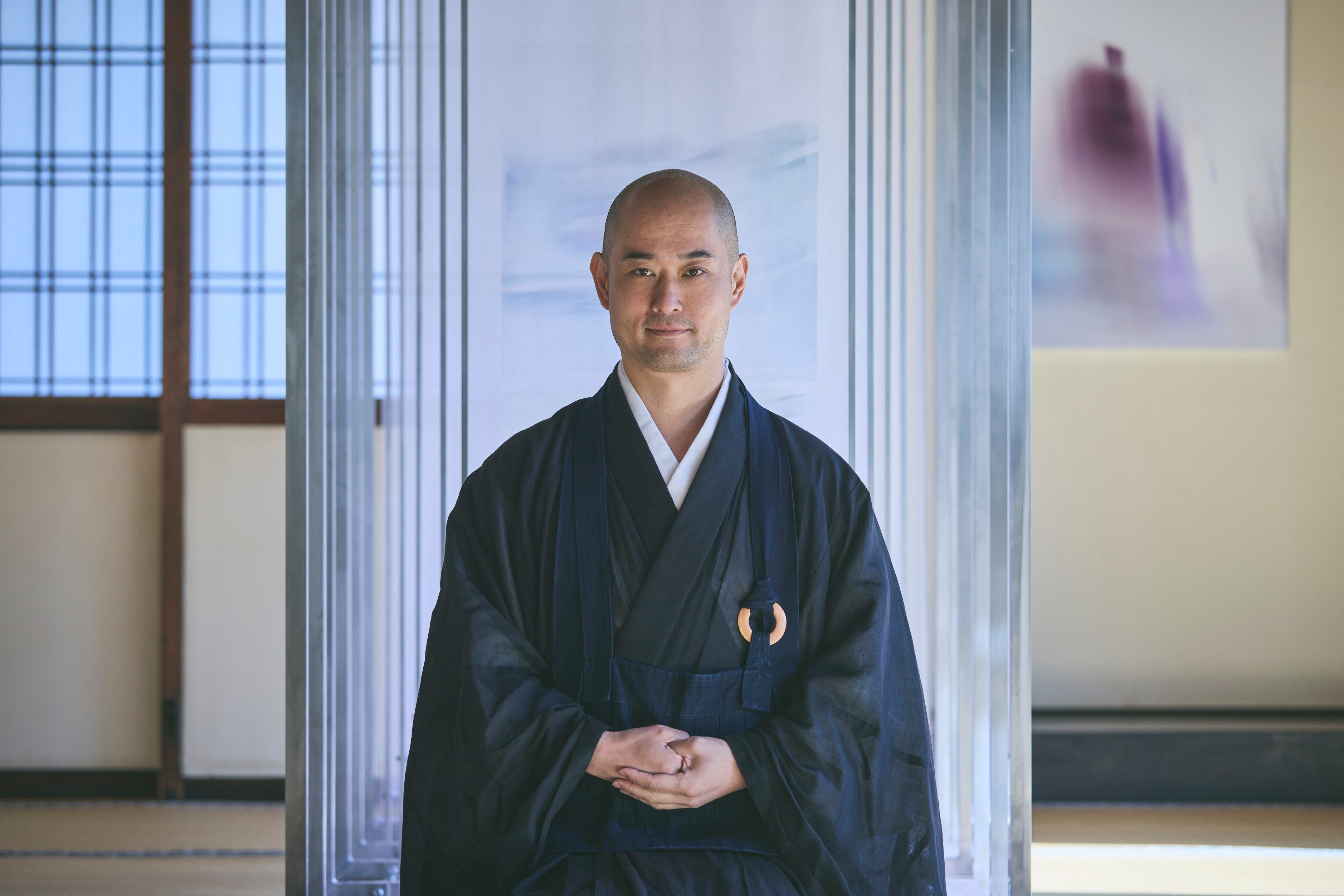
TORYO ITO
Vice-Abbot of Ryosokuin Temple
Born and raised at Ryosokuin in Kyoto’s Gion district, he was ordained under the guidance of his grandfather, the temple’s 22nd abbot. After undergoing training at the Kenninji sect’s specialized monastic dojo, he became vice-abbot in 2007, assisting his father, the temple’s 23rd abbot. He has guided over 200,000 people in Zazen both in Japan and abroad, and has introduced new approaches to temple visits at Ryosokuin—most notably through contemporary art exhibitions—bridging the temple’s 600-year history with the present day. His international engagements include leading Zen sessions at Meta (formerly Facebook) headquarters in the U.S., as well as in various parts of Europe and Asia. He is also involved in a wide range of modern initiatives: co-developing the meditation and Zen philosophy app “InTrip,” launching “XEXE,” a platform proposing contemporary interpretations of the tea ceremony, and collaborating with design hotels, fashion labels, and lifestyle brands.
In 2023, he was named one of Forbes JAPAN’s “Next 100” and one of Newsweek’s “100 Japanese People the World Respects.” He is also an active writer, contributing to magazines and online media, and is the author of “Boga Shiko: Isshomono no Tou Gijutsu” (Selfless Thinking: The Art of Lifelong Inquiry, published by Nikkei BP).
More from TORYO ITO:
BOOK
Bōga Shikō “Thinking Beyond the Self” (2023 Japan, Nikkei BP)
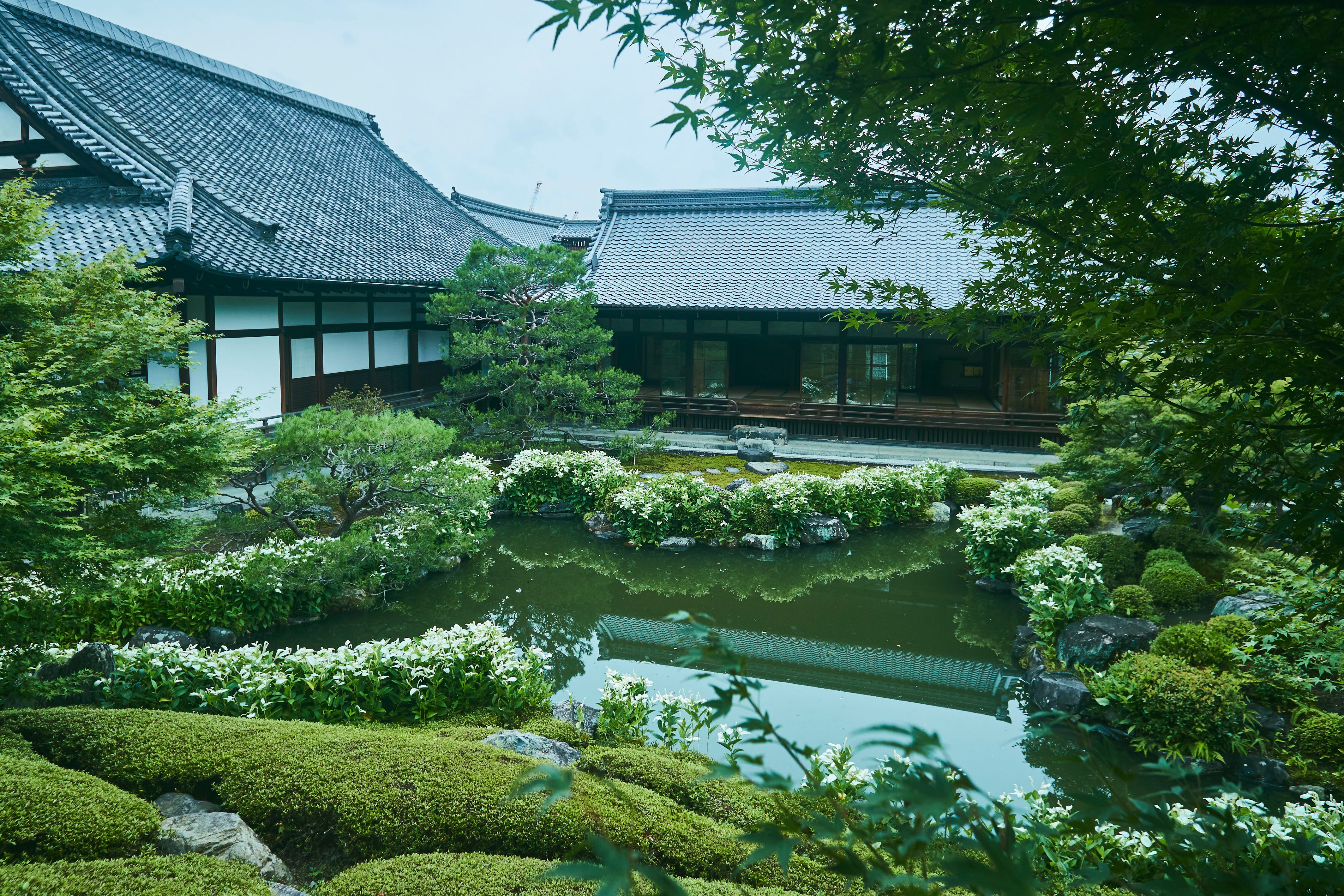
My guest today is TORYO ITO — A Rinzai Zen monk and practitioner of applied Buddhism, exploring how Buddhist wisdom and Japanese aesthetics can help us navigate the challenges of contemporary life.
Conversation
July 2026
Shoukei:
Welcome to this podcast, Toryo-san.
Toryo:
Hello, Shoukei-san.
Shoukei:
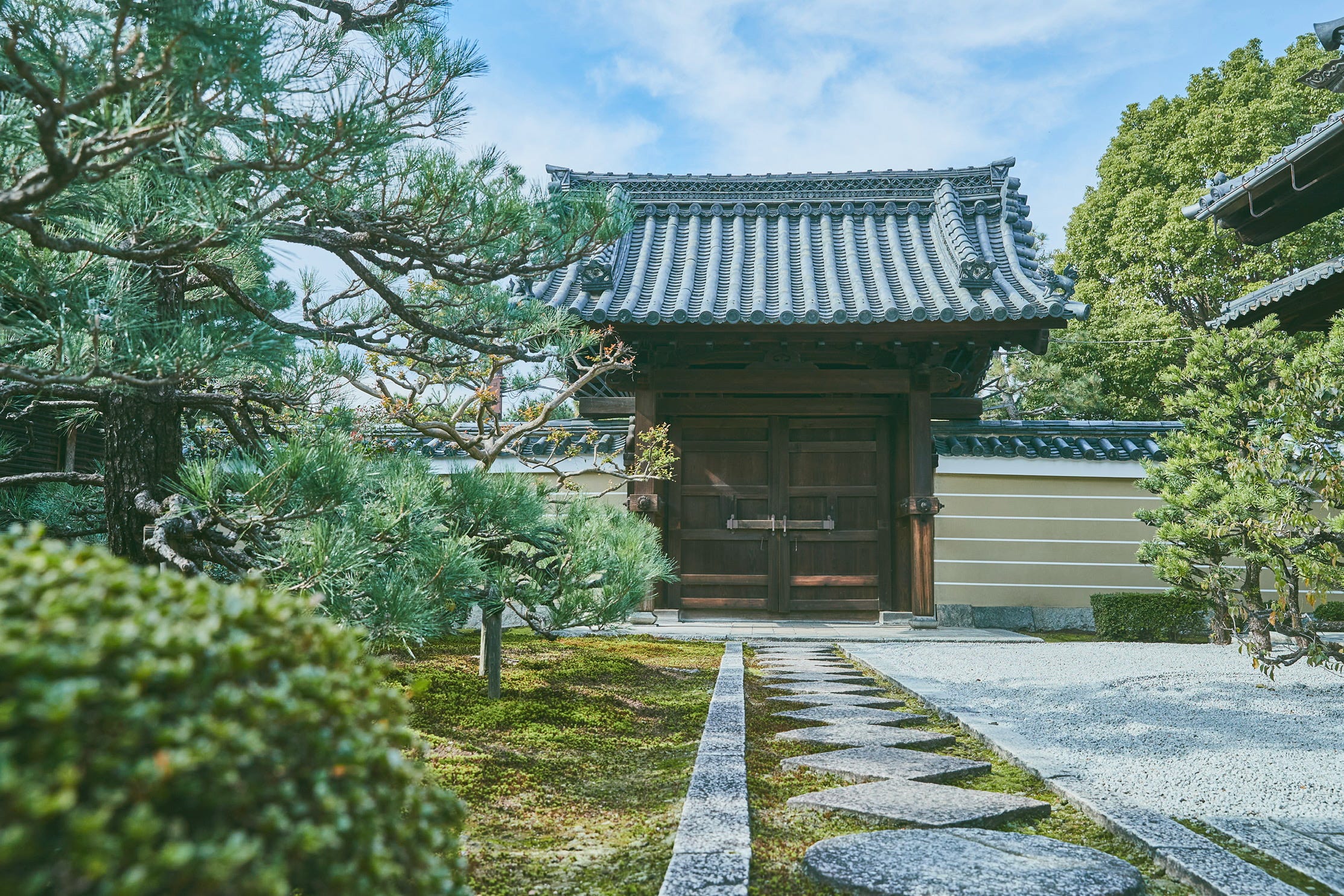
I’m very glad to be here at Ryosokuin, a very beautiful temple in Kyoto. And I think today is one of the best days. Actually, every day should be the best day. But it’s raining, and that makes the moss and the stones even deeper.
Toryo:
Yes, the green has become very vivid.
Shoukei:
Very beautiful. It’s been a while since we last met. We first met on a journey to Bhutan.
Toryo:
Yes, that was the first time. Maybe I had seen you in a magazine or in the news, but that was the first time we met in person.
Shoukei:
You are in the Zen tradition, specifically the Rinzai school. And I am in the tradition of Nembutsu, Pure Land. Your practice is sitting. My practice is more about chanting, and actually listening, listening to the voice of the Buddha. But anyway, we share the same Mahayana Buddhism here in Japan, and we are both living in Kyoto. So this is a casual conversation. My intention is, I have no intention, actually. But I hope the audience can sense something out of your life and your voice. Where do we start?
Toryo:
Let me introduce myself a little. In recent years we have been looking for how Zen practice can meet contemporary society. Our activities include zazen meditation, for individuals, for society, for international retreats, and also memorial services and hosting art exhibitions.
Shoukei:
I see. The memorial services are, I guess, almost only for Japanese, the supporting members of this temple.
Toryo:
Yes, exactly. Maybe ninety-nine percent Japanese. Some are Japanese living in other countries. But no international members.
Shoukei:
That’s an interesting part. For Japanese, temples are the places where we pray for our ancestors, or the place for funeral ceremonies. But for people from other countries, a temple is a kind of meditation center, or an art gallery. So you are living among a very different variety of visitors.
Toryo:
Yes. Now we have many requests from overseas for private group meditation sessions. They already have experience sitting in their own countries, and Japan seems to be a kind of legendary space for meditation, especially a trip to Kyoto, to have a special meditation session. It’s like sushi. They eat sushi in their own country, but they really want to know what itamae sushi is, the counter style. That’s different from the adapted sushi restaurant. Local, pure, genuine. So when they meditate in their country, they want to have a genuine meditation session in Kyoto, at a temple. That’s why we get so many requests. That’s my sense of it.
Shoukei:
I can imagine. What is your impression of their experience here?
Toryo:
They enjoy this environment a lot, because normally they don’t have gardens with such a long history in front of their sitting place. In a Zen center, it is probably inside a building. They sit facing each other, they don’t let so much air come in, and they don’t hear the voices of birds where they sit. But here there are very few boundaries between the inside of the building and the external space. So they feel they are blending with nature, and with an inherited space.
Shoukei:
What you say totally resonates with something I have been thinking about recently. When I explain Japanese Buddhism, I sometimes use this word. Japanese Buddhism is like Ambient Buddhism.
Toryo:
Mm, interesting.
Shoukei:
You must know ambient music, by Brian Eno, for example.
Toryo:
Kyoto had, I forget the name, a kind of ambient music festival.
Shoukei:
Yes. My point is this. Here, Buddhism is not something separated from other things. Buddhism is something embedded in the air, in the ambience of this land, of Japan, of Kyoto, of this habitat. Buddhism is not just about teaching, not just about practicing meditation, not just about culture. Everything is mixed and integrated. In other words, whatever you do in this ambience of Buddhism, what you receive is the idea that nothing is separated. So I can imagine how visitors appreciate this ambience of no separation.
Toryo:
So the temple can be a site where you first slow yourself down, and then release the tension and the many thoughts in your head. Gradually you step away from your patterns, your bias of thinking. And then you can listen to how nature speaks to you. That shifts how you perceive, how you recognize your surroundings and the relationships around you. That’s what I lead as meditation. I have almost nothing to do for them. I just open the space. I ring the bell, I prepare, and together they open up their senses. Then something happens. Not so much action, but not too passive either. It’s like fermentation.
Shoukei:
Just like fermentation. You cannot control it. What you can do is only taste it.
Toryo:
And preparation, and caring. Caring means we have to clean the space before we welcome the guests. That’s a really important part of the preparation, caring for the space. And then preparing good seats, good cushions. When you sit there, it’s necessary to have good support.
Shoukei:
So you prepare the space, hoping that everybody will enjoy it and receive something out of this ambience. But still, you don’t have control over the outcome of the experience.
In that respect, these days I have come to revisit the importance of the notion of karma. Because, as you said, we are a product of karma. In other words, a product of past patterns, accumulated past patterns. So what I am speaking right now is inevitably bounded by the accumulated words I have gone through in my life. This is why Shakyamuni Buddha said karma is your action, and karma is also your habit. And sometimes you can extend that realm of karma beyond your own life. Some of my patterns come from my parents, my grandparents, and so on. Anyway, I am a product of accumulated patterns from my past experience. So it is important to calibrate how I perceive the world sometimes, in a different environment. Like this one.
Toryo:
In the Zen tradition we don’t often use the word karma. But karma is something not only focused on the past, more like focused on the future. Because the action of today is to be a seed for the future.
Shoukei:
Yes. So you invite people to calibrate, or to tune, their recognition of their accumulated patterns, so that they can find, or step onto, a slightly different path for the future.
Toryo:
Exactly. Now we are talking about our personal patterns, our ways of thinking. I think that is the second step of how they can shift toward what they want to be. The first step, in my opinion, is to make the mind calmer, to slow down, by opening up the senses. Today, for example, it’s rainy, with many varieties of the sound of rain. That can be a good stimulus to open the senses and welcome the ambience. But if it is just cloudy and not so windy, they don’t find so much difference from an ordinary day. They might focus on the heritage, the old architecture, the ancient Buddha statue. That’s not what I want. My focus is to make something that gives them a small trigger, to allow themselves to relax and open themselves. And at that point, I believe in artwork a great deal.
Shoukei:
As a trigger. Yes, that is what I wanted to ask you next. You provide a space for visitors to meditate, but at the same time you welcome many visitors for your art exhibitions. So you are almost an art curator in some aspects, a planner. Tell me your thoughts about bringing artworks and artists into this very traditional Zen temple in the center of Kyoto. And how do you relate art to Zen?
Toryo:
First, let me tell you a short history of my life. When I came back to this home temple from the training monastery, my first role was to organize the warehouse, to clean it up, and to sort the hanging scrolls, the byobu screens, the ceramics. So my main role was preserving cultural heritage. And by doing so, I realized that most of these things, which across the centuries still give us a strong impression and great value, used to be contemporary art. Because they used the high technology of their era, and they imported a lot of international materials. As ceramists, for example, they used new glazes and new techniques from Korea and China. Many things were integrated.
Shoukei:
I see. So from our perspective today, these look like very traditional, old things. But at that time they were very new, cutting-edge technology as well.
Toryo:
Exactly. So by organizing our warehouse I learned that my role is not only preserving, but also creating a new approach, new work with contemporary artists. Then I started to shift my way a little.
Shoukei:
I see. So in that sense, what you are doing, which sometimes looks very new, is not really new. You are in the lineage of your ancestors.
Toryo:
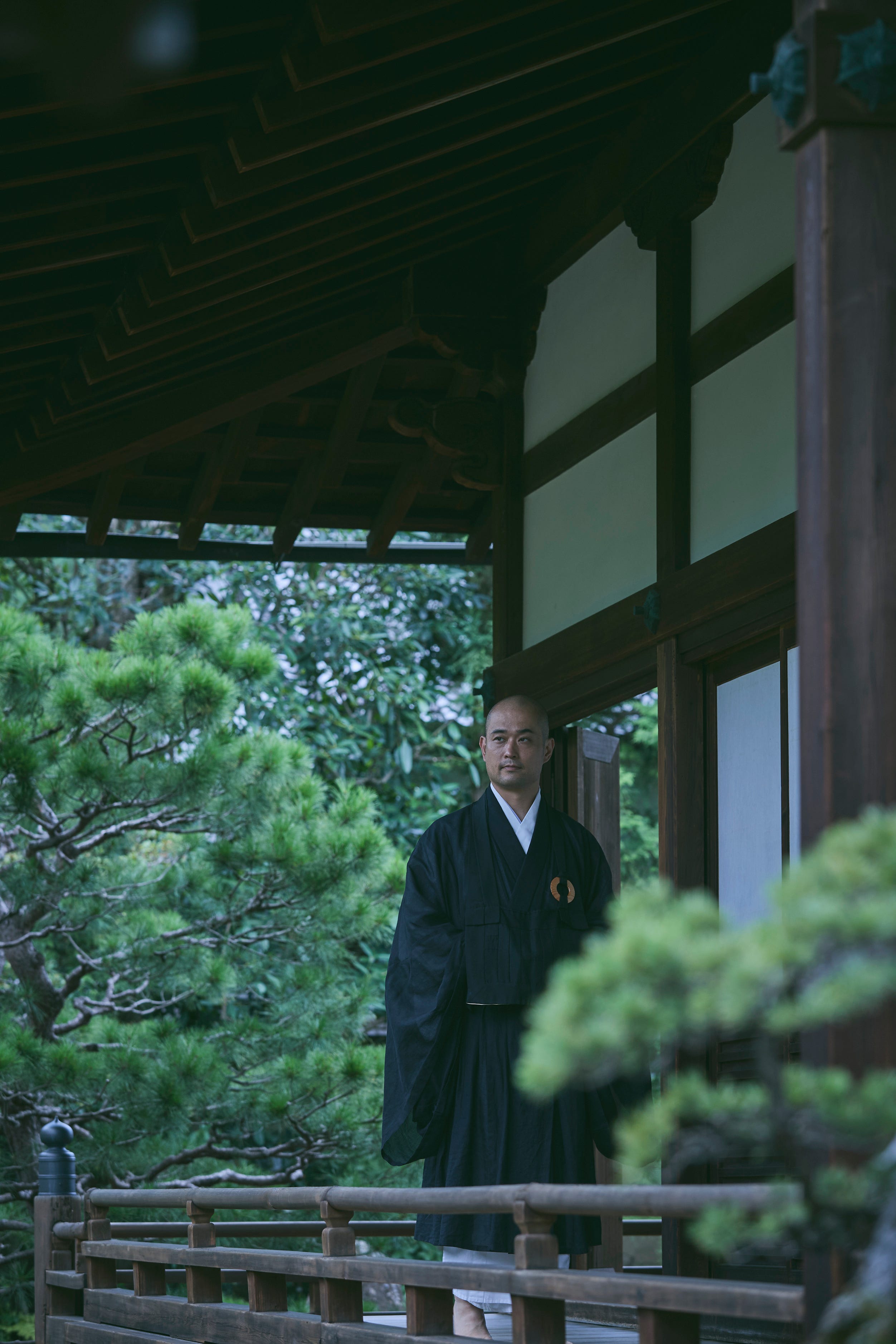
I hope so. It’s a kind of revival of the way of Zen. Zen welcomed many contemporary artists for a long, long time, through a long history. But in our age, we focus on looking back and protecting that culture. That’s important. At the same time we should, and we want to, develop and evolve a new culture as well. That is Living Zen, in my opinion.
Shoukei:
Living Zen. So to embody Living Zen, you should be avant-garde.
Toryo:
In that sense, when I welcome artists, I sometimes challenge them to push the boundary. Go further. Try a new way of drawing, of making forms.
Shoukei:
Don’t be conservative.
Toryo:
Don’t be conservative.
Shoukei:
And what is the response from the artists?
Toryo:
If I only say to them, “Don’t be conservative,” I don’t think that works. So I open the space, this room, for example, for them to use as their atelier. Temporarily, just for a couple of days. And I invite them to sit together, or to enter the tea house to have a tea ceremony. Through that cup of tea we have some casual talk, and I think that can influence their work. Because the room itself is very unique. The size of the room is pretty small for them, and just preparing a cup of tea takes twenty minutes. That is the scale of Japan. Usually their work is something really huge, but when they present their work in Japan, especially at a temple in Kyoto, they make a smaller size. That’s interesting. And sometimes, the smaller the work is, the more intensive it is.
Shoukei:
I see. So what you do is not just bringing artworks from other countries. You truly invite artists into this space, into this ambience of Buddhism, and you let them be immersed in it, so that they get some inspiration from it, and maybe, beyond the boundary, something arises.
Toryo:
Yes, that’s what I am trying to do. That’s a kind of true incubation. “Incubation” is maybe a business word, but it is like incubating their new wisdom of Zen.
Shoukei:
I can understand what you say, because right now I am in this space, so I can feel this ambience. So I hope that the people who listen to this voice will visit this space in person.
Toryo:
I hope so.
Shoukei:
Speaking of the future, I believe you will continue what you’re doing. But is there anything else in your mind for the future?
Toryo:
Yes, a lot. For example, I want to keep developing these art activities, and maybe not have them curated only by me, by a monk. I also want to involve a real curator, to refine the quality of the exhibitions, and to have artists stay at the temple. That includes renovating the temple’s architecture. Not to make it a very comfortable place to stay, but a little more functional. Because we live in this temple with our whole family, my parents, my two daughters, my wife. So I need to make a good separation, a good boundary between the family side and the temple side. Rebalancing is a good word.
And maybe the biggest challenge is to find a new way of financing the temple. Before, we used to focus on the community, and prayers for the ancestors. Then gradually we started to welcome many participants in Zen, and audiences for the art events. It’s not so sustainable with just these three pillars. So I need to find a better balance. We might also need a fund to think about the architecture for the future. A grand design of the architecture is necessary, in my opinion. Otherwise something gets damaged, and we repair it, then another place is damaged, and we repair that. We just keep repairing one thing after another. That’s not a good way to protect the quality of the architecture. And when we run short of budget, we choose the wrong way, not the traditional way, but the cheaper way.
Shoukei:
That is why many temples and shrines, not only temples, are like patchwork buildings today. Repaired in different generations. This part thirty years ago, this part a hundred years ago, and so on.
Toryo:
So I think that with a good architect, we need to make a master plan for the next fifty years, and then create a fund to support that architectural master plan. And to make that fund, I need a lot of supporters. Our current activities alone are probably not enough to gather funding members. So I need to explore a new way. Maybe you are more experienced.
Shoukei:
Not really, I am a monk without a temple. But I understand your point. In terms of funding, I guess you need to create some sort of vision, a big purpose for the future generation. So what do you think should be the big purpose of a temple like this, for society today?
Toryo:
That’s a good point. Of course we need to have a clear vision. First of all, this temple should be a place where people can find a new, good balance, equality. Equality of people. In Japan there is a big gender gap now. But here, we appreciate the artworks and meditate together as if there were no border.
And I want to welcome not only artists but also, I might say, expressionists. People from many backgrounds. I want to show that the chance is equal for everybody. Open for everybody, first.
And then I think there is a big possibility for this place to become a kind of creation platform. As a residency. Residency doesn’t mean staying overnight for a long time. Maybe staying here for a while, as a temporary atelier or a temporary resting space, to charge their energy to create something, or to express themselves. I also think this temple is a kind of center of the city. So I want to make good partnerships with other institutions. Then we could call it a Kyoto residency, welcoming people from overseas to stay in Kyoto, including the temple experience.
Shoukei:
Not as a tourist, but as a citizen, so to speak.
Toryo:
Maybe in between.
Shoukei:
In between. Of course, not literally a citizen.
Toryo:
Exactly. A kind of temporary resident.
And there is one more thing, this is more the architectural part. I want to make something really beautiful. I believe that the power of beauty opens up a fixed idea, like a fighting pose. And finally, that can contribute to world peace. I cannot do something very big, I cannot hold a big conference for world peace. But if I make something beautiful within the temple grounds, then when people meet that beauty, they release their tension, they release their fixed ideas, they reopen a possibility. That is a mission for us.
Shoukei:
In Japanese, Buddha is called “Hotoke”. That sound is very close to the word for loosening in Japanese, “Hotoke”, “Hodokeru”. So becoming, or moving toward, Buddha means loosening. And you think beauty is a big trigger for people to be loosened.
Toryo:
That aligns very much with my art activities. Through them I want to make something aesthetically good. That’s one point. But more deeply, the profound meaning of our activities is making a space that allows the participants to loosen themselves.
Shoukei:
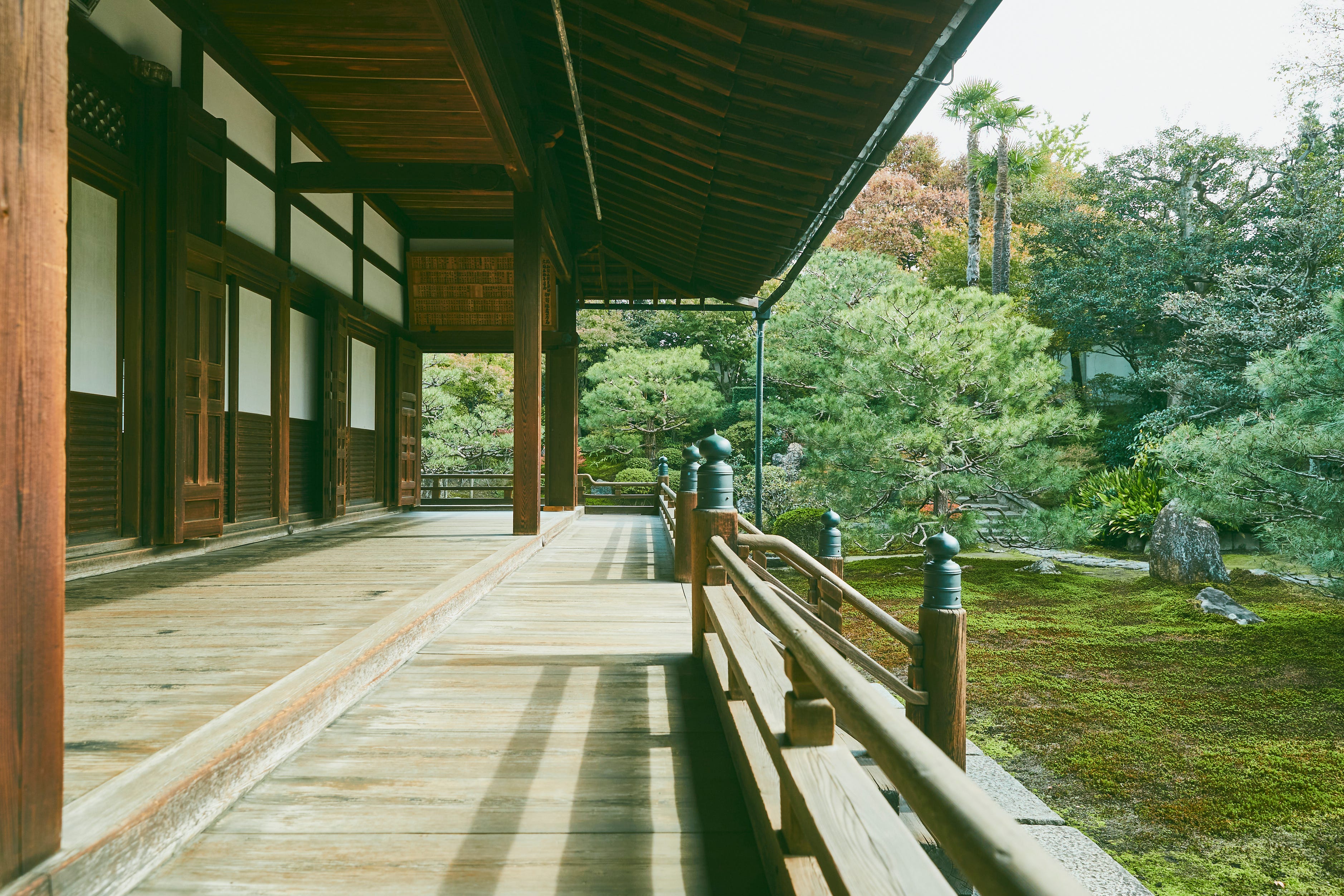
And coming back to the point we talked about at the beginning, cleaning is important. What is interesting about cleaning, “SOJI” in Japanese, is that I think it is not just about cleanliness, but also about composting and emptying. So through this practice, namely “SOJI”, we clean the space. And then, when a visitor comes into this space, they somehow sense the existence of someone who cleaned it, by the absence of dirt. By the absence of something, they find the existence of someone.
Toryo:
Beautiful expression. In Japanese, we say “KEHAI” ——presence of absence.
Shoukei:
Ah, presence of absence.
Toryo:
And also, if you encourage the participants to clean the space together, that’s a very good practice to heighten their awareness, to cultivate their awareness. And that awareness carries over into their professional work, their daily conversation. So in my opinion, cleaning as a way to cultivate awareness is crucial for modern life, because AI can support a lot of things, but people can be aware of slight changes in the world, and of the presence of absence.
Shoukei:
And when you were in the monastery, you cleaned intensively every day. That’s hard work.
Toryo:
But I am very grateful that I was pushed to clean almost everywhere, at the temple, in the monastery. Before, repetitive work seemed very boring to me. But once I had to do it every day, every day I found small differences. Because you repeat, and repeat, and then I found that the temperature of the wooden floor is different every day. How the moisture is absorbed into the wooden pieces, slight differences tell me a lot. Ah, I should be relaxed today. Or, I should work harder today. So I really communicate with simple, ordinary materials. I love that communication.
Shoukei:
The rain is letting up now, and you are about to welcome visitors to this temple this morning. So let me stop here. Thank you so much for joining this podcast, Toryo-san.
Toryo:
Thank you for having me, Shoukei-san.
Shoukei:
See you soon. Arigato-gozaimashita.
— sound cooperation —
Opening
shō (Japanese mouth organ)|Junpei Otsukaorin (Japanese singing bowl)|Syouryu
Ending
piano|Nozomu Takahashi


