
Temple Morning: A Shared Routine to Care for Our Habitat
Temple Morning
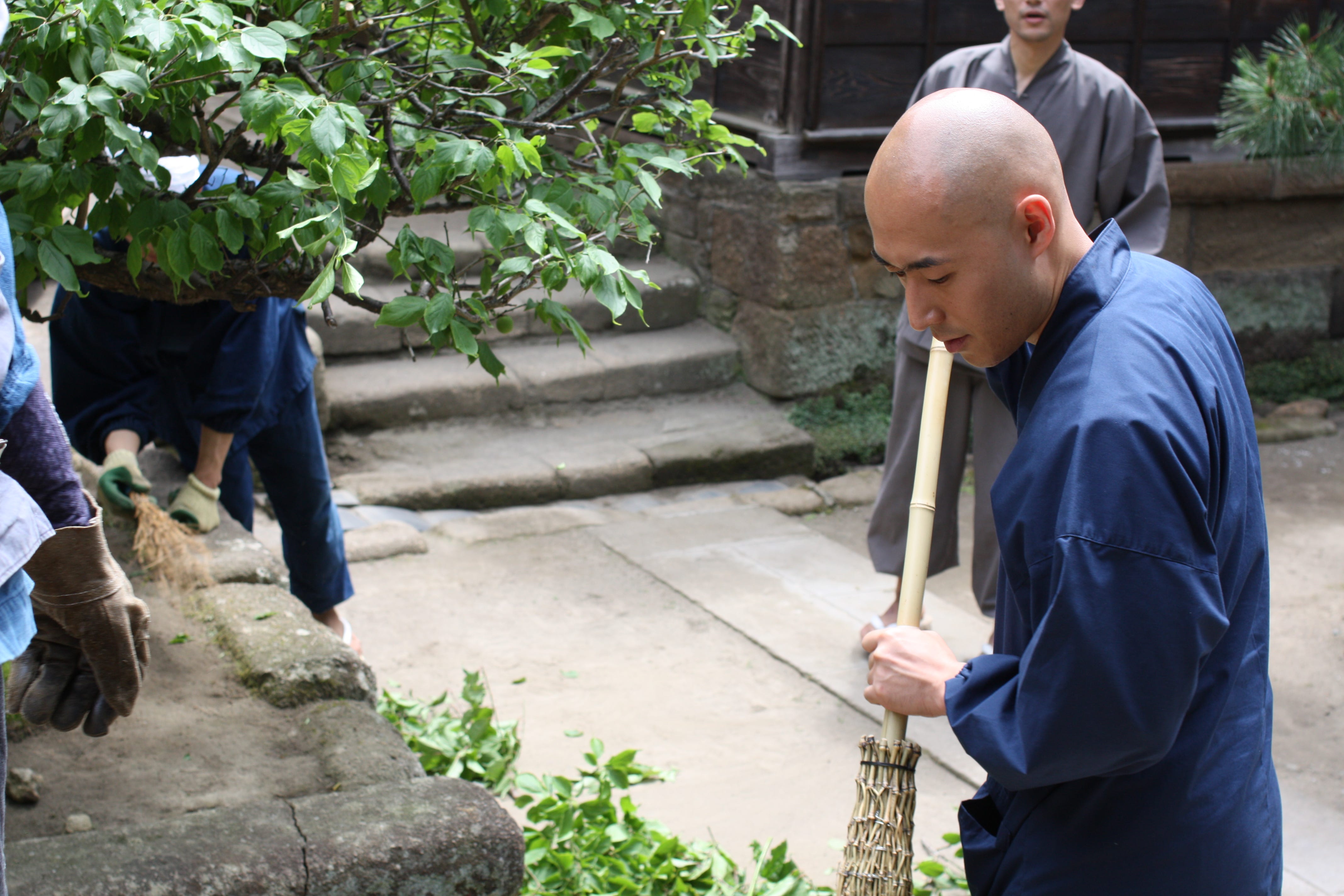
: A Shared Routine to Care for Our Habitat
Introduction: Not an Event, But a Practice
This is not an “event” designed to entertain you. It is simply a slice of a monk’s morning routine, shared with you.
For years, I have explored how ancient wisdom can tune our modern lives, a journey I shared in my books A Monk’s Guide to a Clean House and Mind and Work Like a Monk. “Temple Morning” is the practical embodiment of that philosophy.
We live in a world where we overuse our brains and underuse our bodies. We are constantly connected online, yet often feel disconnected from the ground beneath our feet. Temple Morning is a way to restore that balance. It is a simple ritual to clear the dust of the mind by caring for the world right in front of us.
Wherever I go—whether it’s a bustling city square or a quiet park—I practice this ritual. I invite you to join me in this practice, simply to be there, together.
The Concept:
3 Traditional Acts A Temple Morning consists of three simple acts. In Japanese Buddhism, we call them Okyo, Soji, and Fusatsu.
Okyo (Tuning / お経): 15 min
Traditionally, this means chanting sutras to tune our voices. In our pop-up gathering, we may not chant loud scriptures. Instead, we might walk in silence, listen to the ambient sounds, or hum together. The goal is not to perform, but to tune our inner frequency to the place and the present moment.Soji (Habitat Care / 掃除): 20 min
This translates to “cleaning,” but in Zen philosophy, we do not clean because it is dirty. We clean to polish the mind. The environment is a mirror of our hearts. As we pick up leaves or sweep the dust, we are engaging in “Habitat Care.” By nurturing our relationship with the environment, we silently sweep away the anxieties and noise within ourselves.Fusatsu (Reflection / 布薩): 25 min
Originally, Fusatsu (Uposatha) was a time for monks to confess and reflect. For us, it is a time of “Reflection.” We stand in a circle and share one word about what we noticed during the silence and care.
No Introductions: You don’t need to say your name or job title. We meet here as “True Persons” without rank.
Silence is Welcome: You don’t have to speak if you don’t want to. Just listening to the voices of others is enough.
The Stance:
Come as You Are There are no reservations. No fees. Just bring your body and mind.
When we gather and care for the place, that place becomes a “Temple” for a moment. If you see my post on LinkedIn, it means I am opening a temporary temple in your city.
Come and care for our habitat together.
See you in the morning.