

A few weeks ago, in Washington D.C., I had the profound honor of meeting Monsignor Professor Obiora Ike of Nigeria. While our backgrounds are distinct—one a Japanese Buddhist monk, the other a Nigerian Catholic priest and scholar—our conversation felt less like an introduction and more like a reunion. It was a resonance of the soul, a recognition of two people from different parts of the world who have been digging in the same earth, searching for the same groundwater.
For a long time, our world has been understood through a simple, horizontal axis: the Global North versus the Global South. This is the world of the Global Surface—a plane of geopolitical and economic competition, flattened by a single logic of globalization that seeks to make everything homogenous. This surface-level view, however, only captures the friction we see. It doesn’t explain the heat beneath.
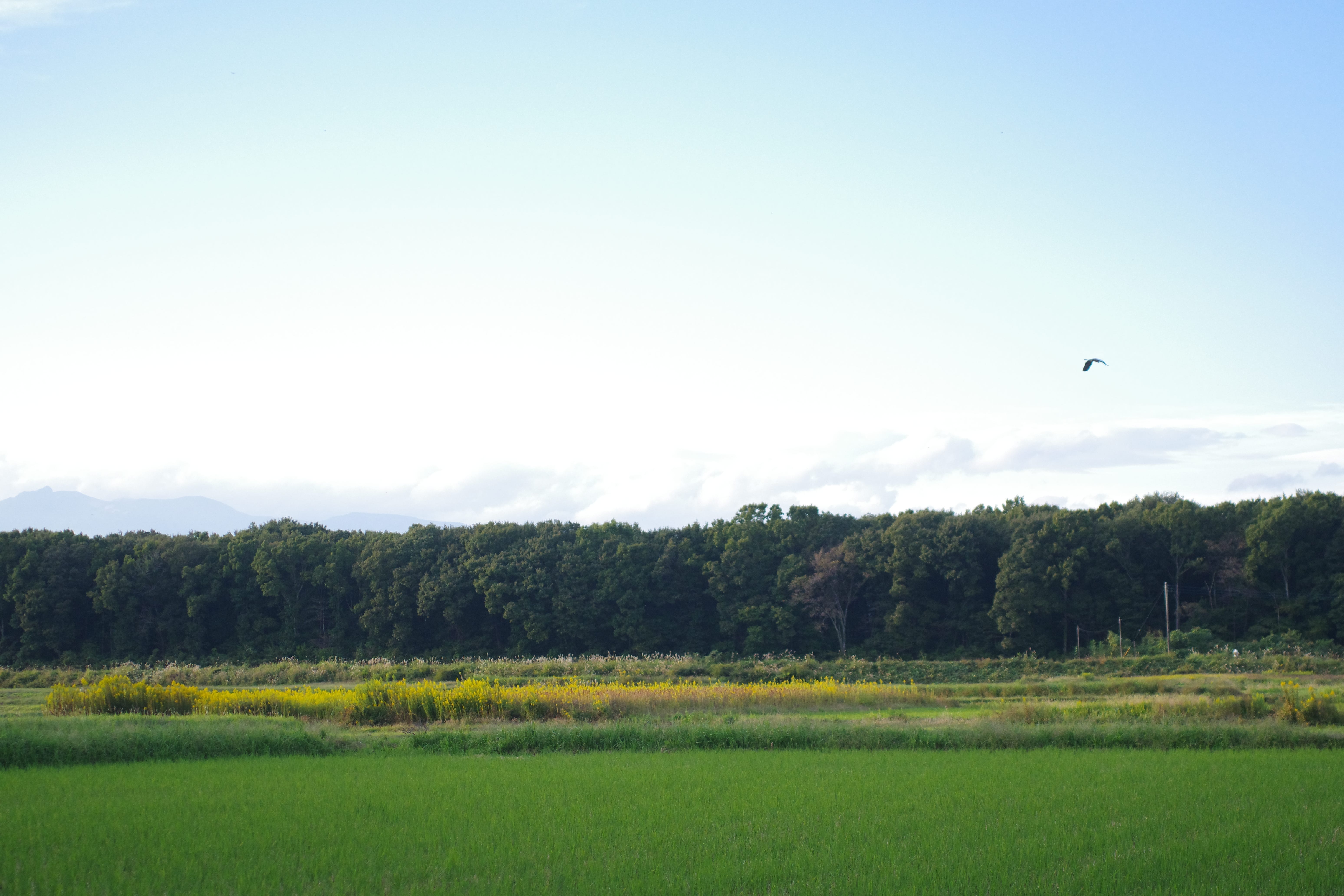
My dialogue with Monsignor Ike gave me a new language for this truth. The division we see today is not just a political failure; it is a reaction against the homogenizing pressure of the Global Surface. It is a deeply human, even animalistic, impulse to reclaim what is authentic. It is a movement back towards the Indigenous Soil—the fertile, living ground of culture, values, and spirituality unique to each land.
Before we are human beings defined by grand ideas and ideologies, we are animals. And like all animals, we are fundamentally shaped by our habitat. The indigenous soil is not just a metaphor for culture; it is the very habitat of our consciousness. The current global fragmentation, then, can be seen as a collective, instinctual drive to return to a habitat that feels authentic and nourishing. This division, therefore, is not something to be simply lamented; it is a sign of life, a sign of people everywhere trying to reconnect with their roots.
And yet, here lies the crucial next step in our understanding. We must remember that these unique soils are not isolated islands. They are all part of one continuous earth, a single planet. The ultimate task is not to remain in our separate plots, but to recognize that the ground beneath our feet is, in fact, connected to all other ground. It is to remember the oneness of the Earth itself.
In this, I feel that Africa and Japan share a particularly deep soil, and thus a special role.
On the surface of Africa, one sees the powerful legacy of global forces; Catholic churches, for instance, stand as prominent features of the landscape. Yet, the very theological concept of inculturation—the process by which the gospel adapts to a local culture—paradoxically reveals the indomitable strength of the original soil. The new seeds do not replace what is there; they must learn to grow in the existing earth, drawing nutrients from it, and being transformed by it. The indigenous soil of Africa’s spirituality is too powerful to be removed.
This reminds me of the Japanese novelist Shusaku Endo, who famously described Japan as a “swamp.” He argued that foreign ideologies like Christianity do not take root in Japan in their original form; the swampy soil of Japanese animism and cultural ethos subtly alters them, making them into something uniquely Japanese. Africa is not a swamp, but it has its own powerful soil. A soil rich with an animistic worldview that sees a life force in all things, a deep respect for ancestors, and a holistic understanding of reality.
In that shared deep soil, we found our most powerful point of connection. From the African soil grows the philosophy of Ubuntu: “I am because we are.” It is a worldview where the self is realized not in isolation, but through community. From the soil of my own tradition grows the Buddhist teaching of Interbeing (縁起, engi), the understanding that nothing exists independently; everything arises in a vast, interconnected web.
Ubuntu and Interbeing. Two expressions, from two continents, for the same fundamental truth. They are the wisdom of the indigenous soil, a shared answer to the individualism of the Global Surface.
It was this shared foundation that allowed us to connect so immediately on a practical level. Monsignor Ike resonated with the terms I use to describe my own path: a “secular monk,” a “spiritual entrepreneur,” on a mission to “democratize spirituality.” These are not just labels; they are descriptions of a shared vocation. A secular monk is one who brings contemplative practice into the world. A spiritual entrepreneur is one who, like Monsignor Ike, builds new structures—NGOs, microfinance banks, ethics networks—to give ancient wisdom a tangible form. And to democratize spirituality is to make this wisdom accessible to all, as the birthright of every human being.
Our meeting was a powerful affirmation. It confirmed that the work of digging into our respective soils is not a solitary act. It is a shared project. Perhaps this is the shared leadership role that Japan and Africa can offer the world: to demonstrate how to connect deeply with one’s own indigenous soil, and from that place of rootedness, to reach out and connect with the soil of others, remembering the oneness of the whole Earth.
This post is my response to him—an expression of gratitude and an open invitation to continue the dialogue. The challenges of the Global Surface are great, but the wisdom held in the indigenous soil of our shared humanity is greater still. I look forward to the day when we can tend to this soil together.