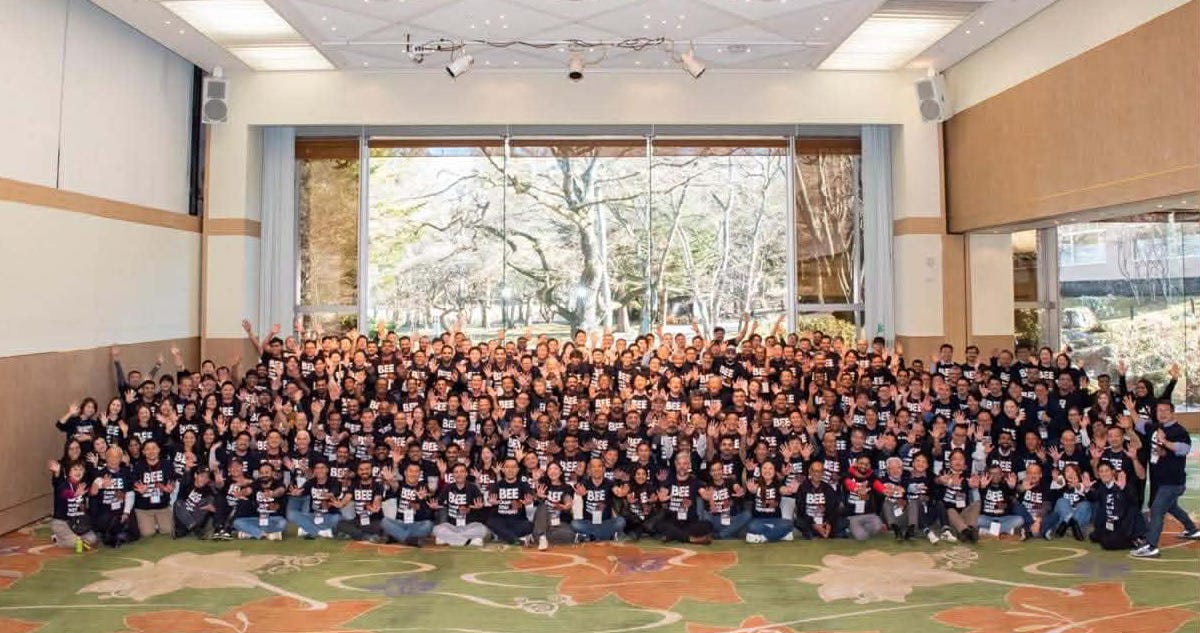
Recently, entrepreneurs from across Asia gathered in Karuizawa, Nagano, for BEENEXT’s “BEE CAMP,” where I had the honor of leading the opening meditation session.
BEENEXT is a venture capital fund that calls itself “a partnership fund of entrepreneurs, by entrepreneurs, for entrepreneurs,” and has supported more than 200 IT startups across 17 countries, including India, Southeast Asia, and Japan.
What does it really take for a business to grow freely beyond the founder’s own lifetime, and continue to unfold into a future we ourselves will never see? Is it a strategy to secure one’s position, an excellent business plan, or a future design superior to others?
In this piece,I would like to share what I spoke about with the participants, and the meditation we practiced together.
I am a Buddhist monk from Japan.
Usually, when people hear the word monk, they might imagine someone living deep in the mountains, isolated from society, undergoing strict ascetic training. But my style is a bit different. I have a family. I run a business. I live a very normal, messy, and busy life, just like all of you. In that sense, I am a Secular Monk.
This is actually quite natural in Japan. Japanese Buddhism is not just a religion for trained monks in monasteries. It evolved into what we call People’s Buddhism. It is a Buddhism for ordinary people. People who cry, laugh, work, and struggle in the mud of daily life.
Because I stand in this tradition of People’s Buddhism, I prefer to call myself an Ancestorist.
Regardless of our religion, culture, or expertise, we all share one universal reality. We are the children of our ancestors, and one day, we will all become ancestors ourselves.
Today, I want to explore a theme that lies at the heart of both leadership and being a human. That is, The courage to explore the unknown.
As founders, you carry a heavy weight. The expectation to be Right. To have a clear vision. To predict the market. To control the outcome. But the more we know, the more we realize what we do not know. The universe is far more complex than our models.
In this age of AI, this Not Knowing is becoming even more important. AI is a powerful Karmic Amplifier. It is trained on the massive data of our past. It is, in essence, Ancestral Intelligence. It is a massive archive of all the patterns humanity has created so far.
If AI represents the patterns of the past, then what is the job of humans who co-exist with it? Our job is not to repeat the old patterns. Our job is to add a New Pattern to this history. In the age of AI, the old distinction between Success and Failure is losing its meaning. Success and Failure are just labels based on past standards. The only question that truly matters now is this: Is it a new challenge, or not? Are we just repeating the archive, or are we adding a new mutation, a new possibility, to the human story?
To create a new pattern, we must be willing to deviate. We must be willing to be wrong. I call this The Grace of Fallibility. Being wrong is not a defect. It is the engine of exploration.
So I would like to invite you to drop the burden of being Right. Let us become Good Ancestors not by leaving perfect answers, but by leaving a spirit of humble exploration for the next generation. Now, to find the courage for this new challenge, we need to ground ourselves in deep time. We are going to practice this connection through meditation.
The meditation we shared was the most common form of meditation in Japan, practiced in many ordinary homes every morning. It is Meditation with Ancestors. Often, meditation is taught as a way to focus on the Here and Now. But here, we feel the Long Now. In the Long Now, the present moment is not just a fleeting second. It is a thick moment where the deep past and the far future are folded together as pure potentiality.
Everything is here. The ancestors are here. The future children are here. And you are the bridge. You do not need to achieve anything in the next hour. Just be here. A simple human being. An explorer.
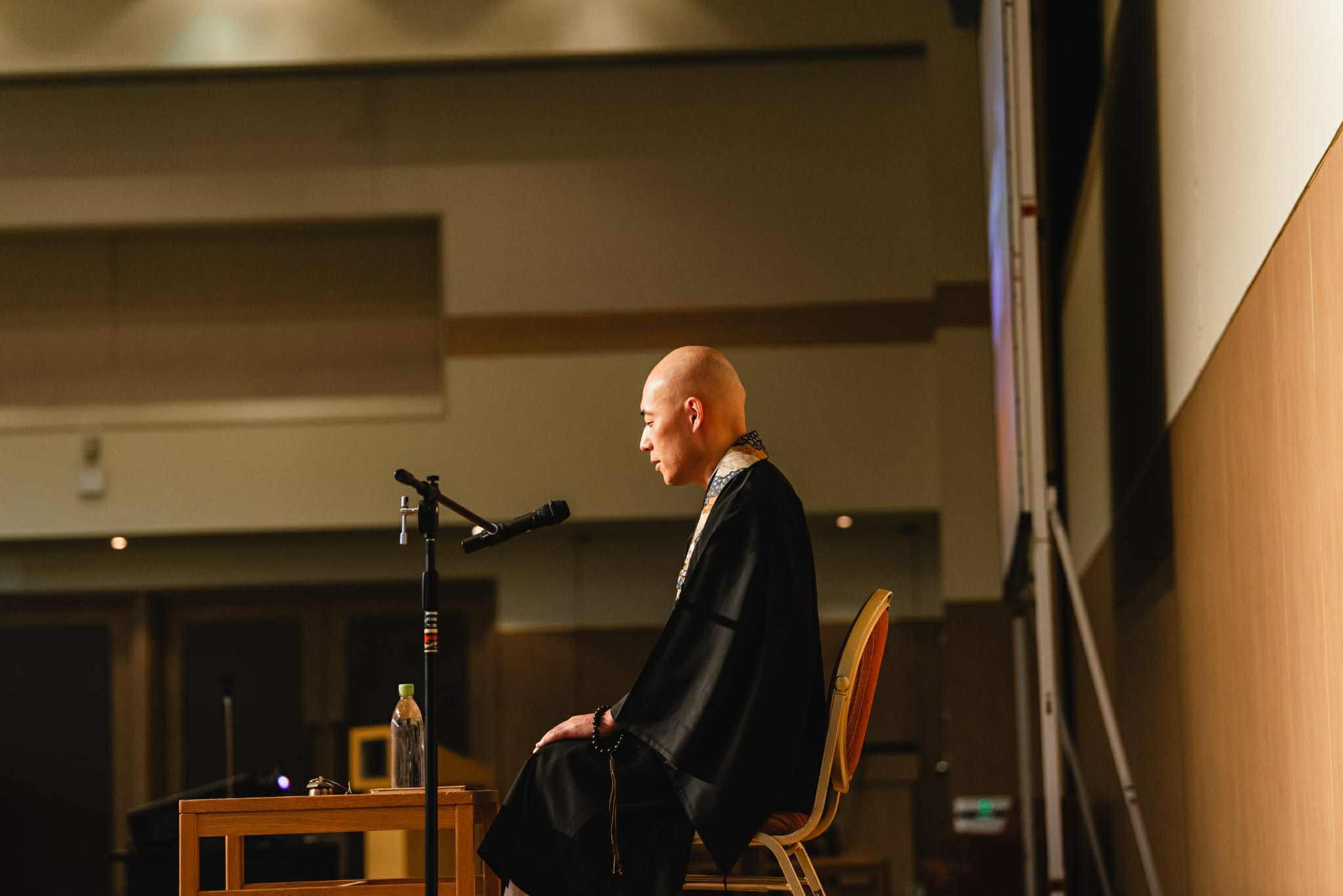
In the meditation session, we practiced a simple ten-minute exercise. I invited everyone to sit upright, close their eyes, and briefly visualize three circles. To the left, the vast circle of the ancestors. To the right, the vast circle of future generations. And in the center, a small circle representing us, here and now. I asked them to sense themselves standing where these three meet, as a conduit through which time flows.
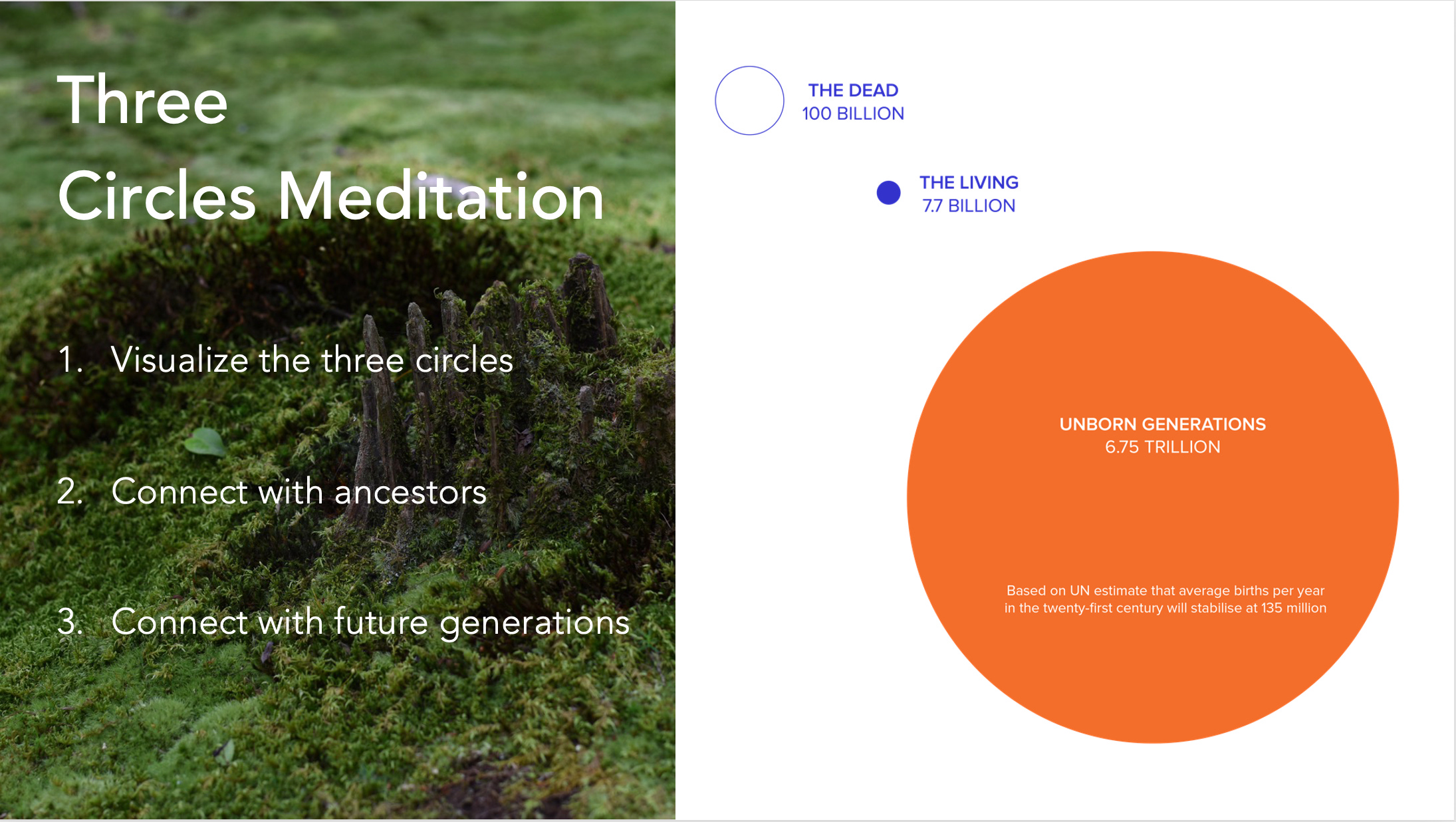
Through the breath, we turned our awareness toward all those who lived before us with each inhale, and toward the children of the future with each exhale. We received, with gratitude, the suffering and wisdom that have been passed down from the past, and we asked what kind of air, what kind of energy we want to share with those who will live after us. Facing the past, I chanted the Heart Sutra. Facing the future, I chanted “Namu Amida Butsu”—the Nenbutsu, a sound of infinite light and life—sending our wishes forward to those yet to come.
We usually breathe unconsciously. Although, the loop of inhaling and exhaling runs on autopilot, when we bring even 1% of our agency, the way we breathe begins to change. It can be deeper and slower.
The same is true for the karma we inherit from the past. This 1% of agency may be the seed of becoming a Buddha. At the same time, it is the essence of leadership: increasing our plasticity and helping an organization adapt and bloom.
To close the session, I invited everyone to turn this reflection back toward the concrete realities of their lives—their karmic entanglements, their way of living, their relationships with family, co-founders, and team. With a few deep breaths and the sound of a bell, I left them with a question:
How can we use this 1% agency today to transform the karma we have received into a beautiful possibility, and become good ancestors for the generations to come?
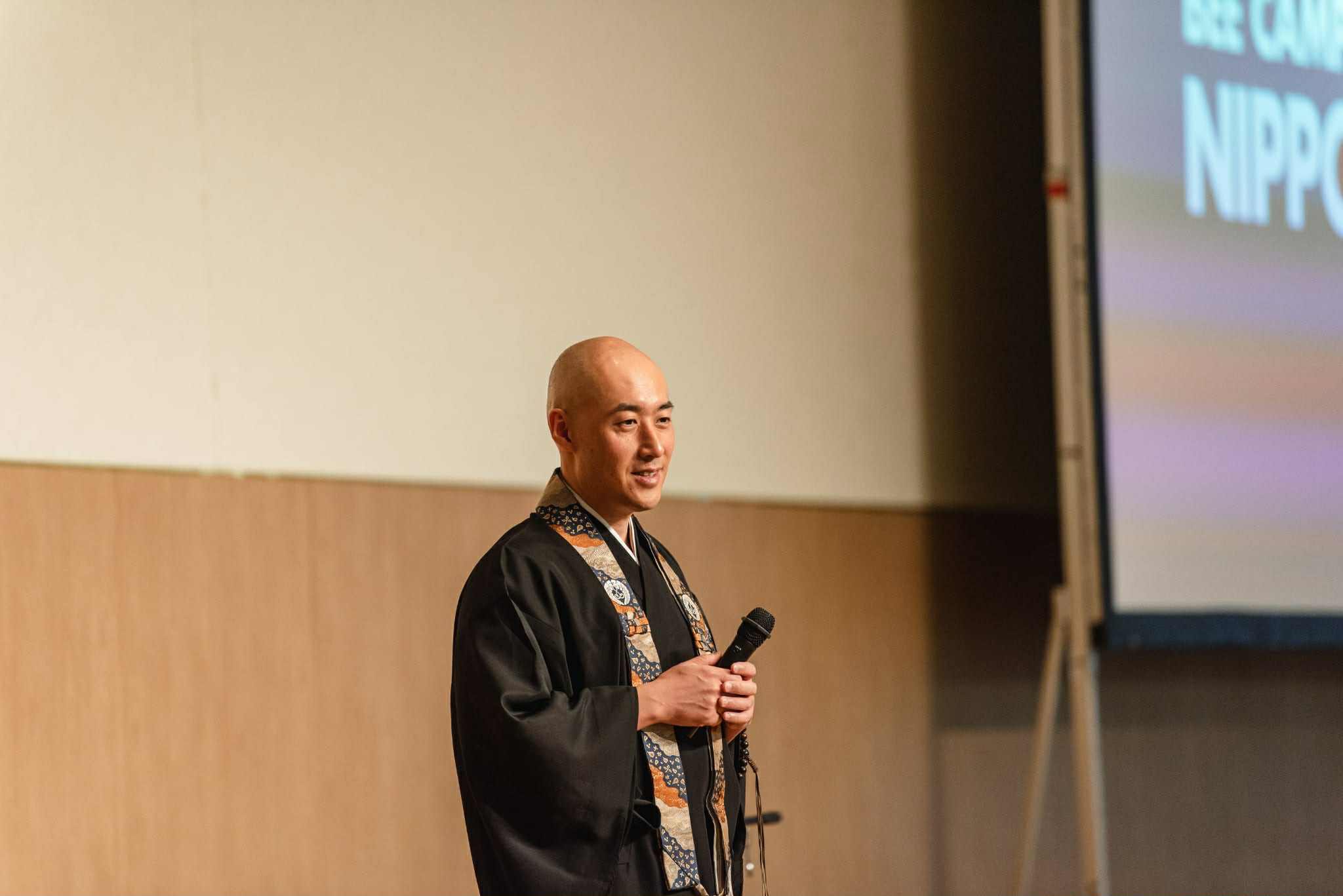
The meditation concluded with the question, ‘How to become a good ancestor?’
When leaders hear this question, many tend to think: “What grand legacy should I build?” They look at the Baton in their hands, their assets, their company, their reputation, and they worry about how to make it bigger and heavier for the next generation. But if the baton becomes too heavy, the next runner cannot run.
Here, I want to offer a distinction between two concepts: Inheritance and Succession.
Inheritance is about the Noun. It is about the Baton. It asks: “What object am I receiving? How heavy is it?” If we focus only on Inheritance, we are crushed by the weight of the past.
Succession is different. It is about the Verb. It is not about the baton itself. It is about the action: “How do I run with it? In which direction do I take it?” Being a good ancestor is not about leaving a heavy baton. It is about showing a beautiful running form. It is about the act of passing it forward.
So, in which direction should we run? I once asked my friend, Audrey Tang, the former Digital Minister of Taiwan. Her answer was simple and beautiful. She said: “I want to leave a Wider Canvas for the next generation.” She didn’t say she wanted to paint the picture for them. She said she wants to leave more empty space, more plasticity, so that the people of the future can choose their own colors and paint their own dreams. The greatest gift of succession is not a finished answer, but the freedom to explore.
And actually, this story goes deeper. It is not just about people 100 years from now. It is about You, tomorrow.I asked Audrey another question: “Audrey, do you have an ego?” She smiled and said: “No. Or rather, I have a 1-Day Ego.” She told me she resets her ego every night. Every morning, she wakes up as a new person, reborn. I asked: “But if you reset every day, how can you make plans? For example, we planned this meeting a month ago. Who made that plan?” She answered: “Ah, this meeting? This is a gift from the Me of one month ago to the Me of today.”
This is the essence of being an Ancestorist. Yesterday’s You is the Ancestor of Today’s You. And Today’s You is the Ancestor of Tomorrow’s You.
Don’t worry about the heavy Noun, the Inheritance. Focus on the Verb, the Succession.
Just ask yourself: “How can I run today to leave a Wider Canvas for the Me who will wake up tomorrow morning?” “How can I give a small gift of plasticity to the future me?”
If you can be a good ancestor to yourself tomorrow, you are already being a good ancestor to the world.
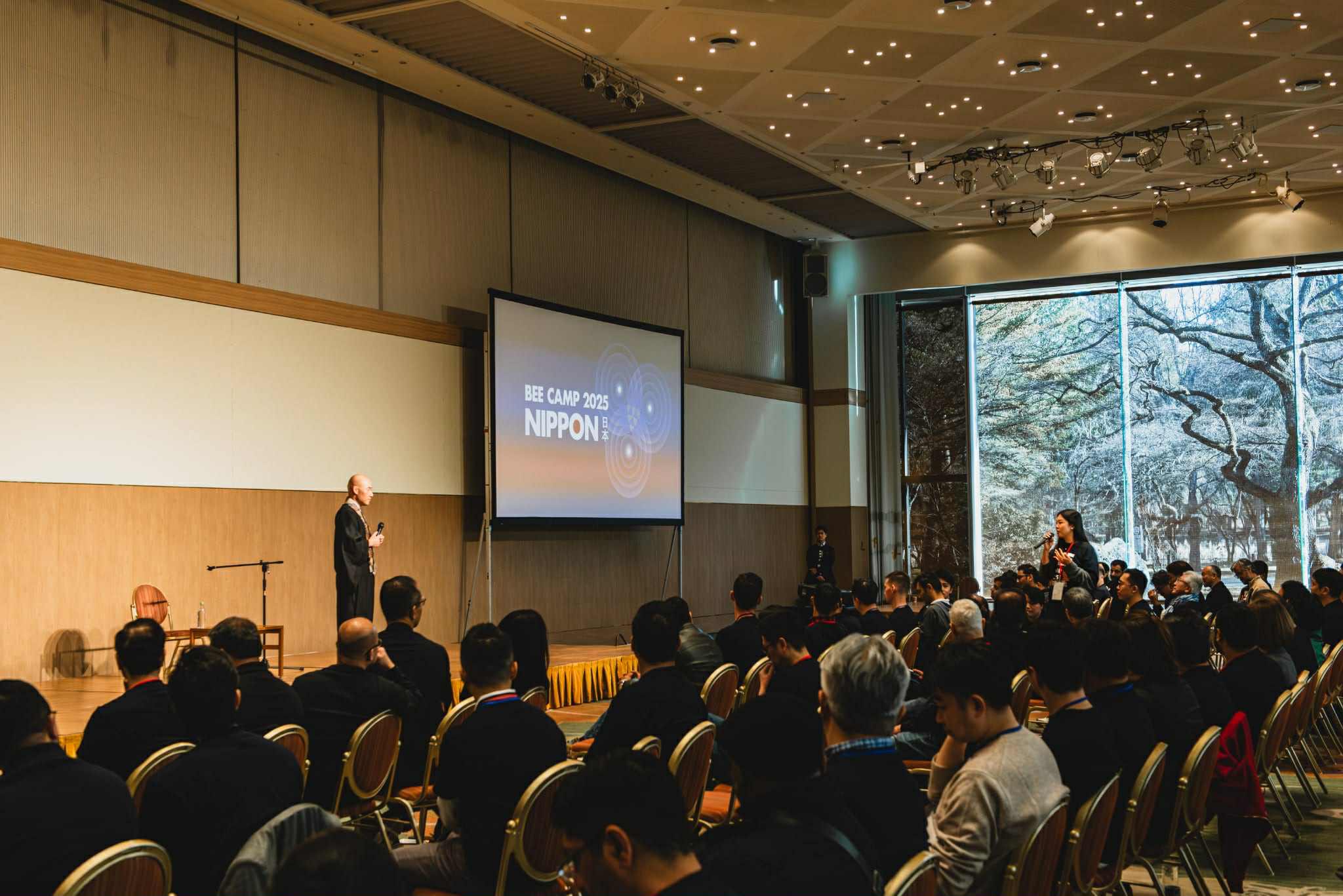
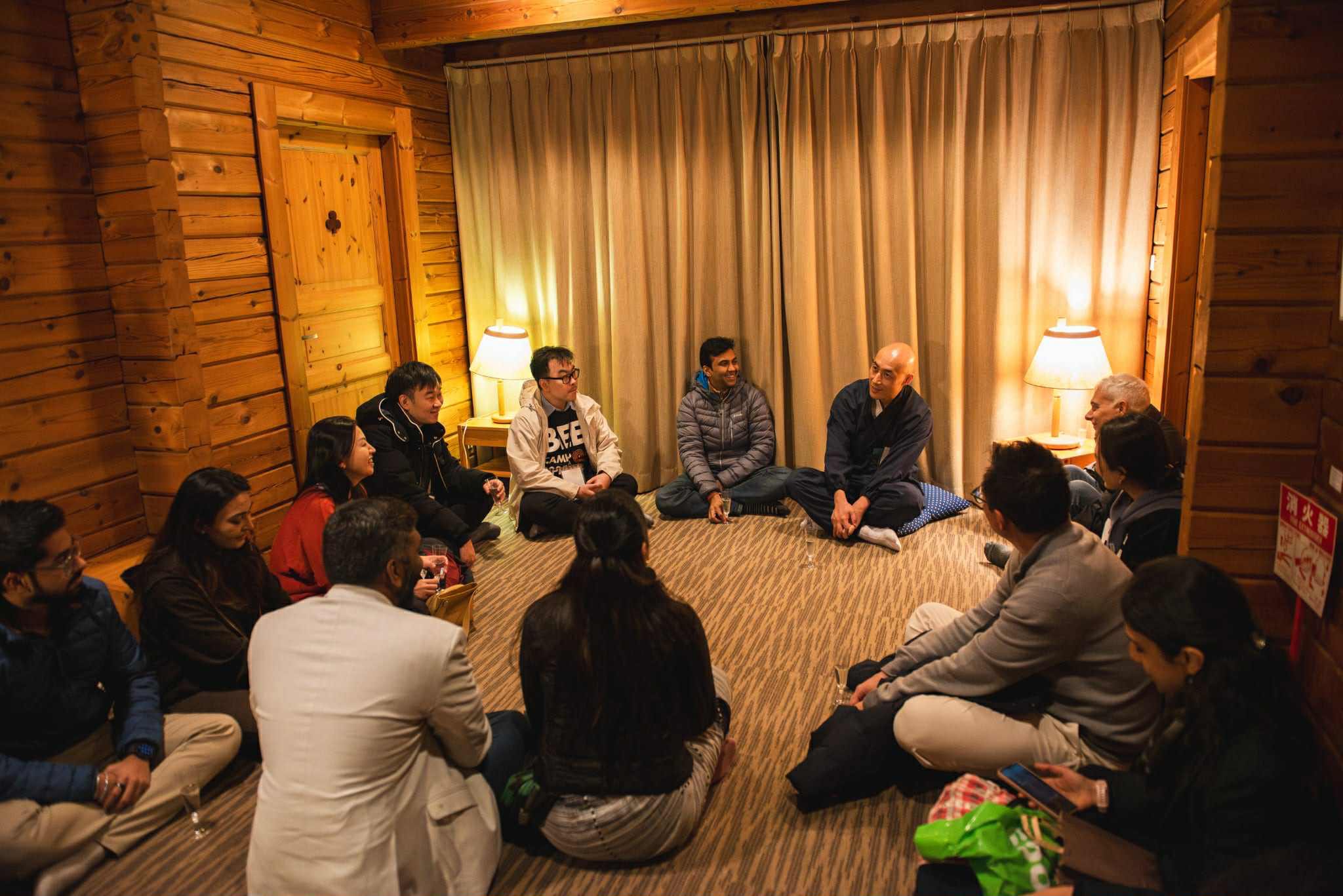
At the end, I invited participants into small-group conversations around the question: “How can we become good ancestors?”
There was only one rule: do not try to produce a Correct Answer or a Smart Answer. No one needed to impress anyone with their intelligence. What was truly welcome was our fallibility—the honest, vulnerable, deeply human side of ourselves.
I asked them to look at the karma and the baton they have inherited—whether in their work, their family, or their private inner struggles—and to notice what feelings arise there. How might they leave a slightly wider canvas for themselves tomorrow than they had today? They were invited to speak from the heart, and when listening, to listen like a mirror: not trying to fix, not rushing to give advice, but simply receiving their own and the other person’s story as it is.
Friends, the future is not something we build with a blueprint. It is something we grow and explore together. Do not be afraid of being wrong. Embrace your fallibility. That is where the light gets in. That is where the new path begins.
For me, the session felt full of warmth, connection, and resonance. As BEE CAMP unfolded afterwards, I hoped that the space would become a field of exploration not only for the people physically present, but also in quiet dialogue with our ancestors, with future generations, and with many companions who are not here but living now, sharing this journey with us.