

Introduction: Fuel vs. Habitat
Hello, my name is Shoukei Matsumoto. I am a Buddhist monk from Japan.
In the global conversation on well-being, we often hear the call for “Self-Determination.” We are told to design our lives, optimize our choices, and control our destiny. My friend and researcher, Yoshiki Ishikawa, frames well-being as the freedom to hold the reins of one’s own life.
https://dentsu-ho.com/en/articles/8979
I deeply respect this view. However, as a monk living in the messiness of daily life, I sometimes feel we are missing a crucial piece.
We often treat humans as if we were pure “Software” to be rewritten at will, or efficient “Machines” running on fuel.
But we are also “Hardware.” We are physical beings subject to gravity, friction, and fatigue. And more importantly, we are living organisms.
To talk about well-being, we need a philosophy that bridges the Physics (our material constraints) and the Organic (our need for a place to live).
I call this approach “An-Yo” (安養).
“An-Yo” is a Buddhist term for the Pure Land. The characters literally mean “Peace (An)” and “Nurturing (Yo).”
Imagine a plant. No matter how strong the seed is, if the soil is dry or toxic, it cannot grow. Humans are the same. We are not machines that run on fuel; we are living beings that need a nurturing “Habitat.”
1. Plasticity: The Physics of Change
Why do we struggle to change? It is not just a lack of willpower; it is a matter of Physics within our Habitat.
Our brains and habits possess “Plasticity”—the ability to change shape. But as the word implies, this is a Material property.
Just as hard plastic requires heat to be molded, our neural circuits require energy and warmth to be rewired. Change creates a physical load.
If you try to reshape a cold, hard material by force, it will snap.
To activate positive Plasticity, we need the right “Temperature.”
This is where the Buddhist concept of “Muise” (The Giving of Fearlessness) comes in.
“An-Yo” is not just a vague spiritual feeling. It is the Thermal Energy of Safety.
It is a “Secure Base” that warms up the Habitat so that the hard material of our karma can soften. Without this warmth, plasticity is brittle. With it, change becomes physically possible.
2. Earthiness: Spirituality in the Soil
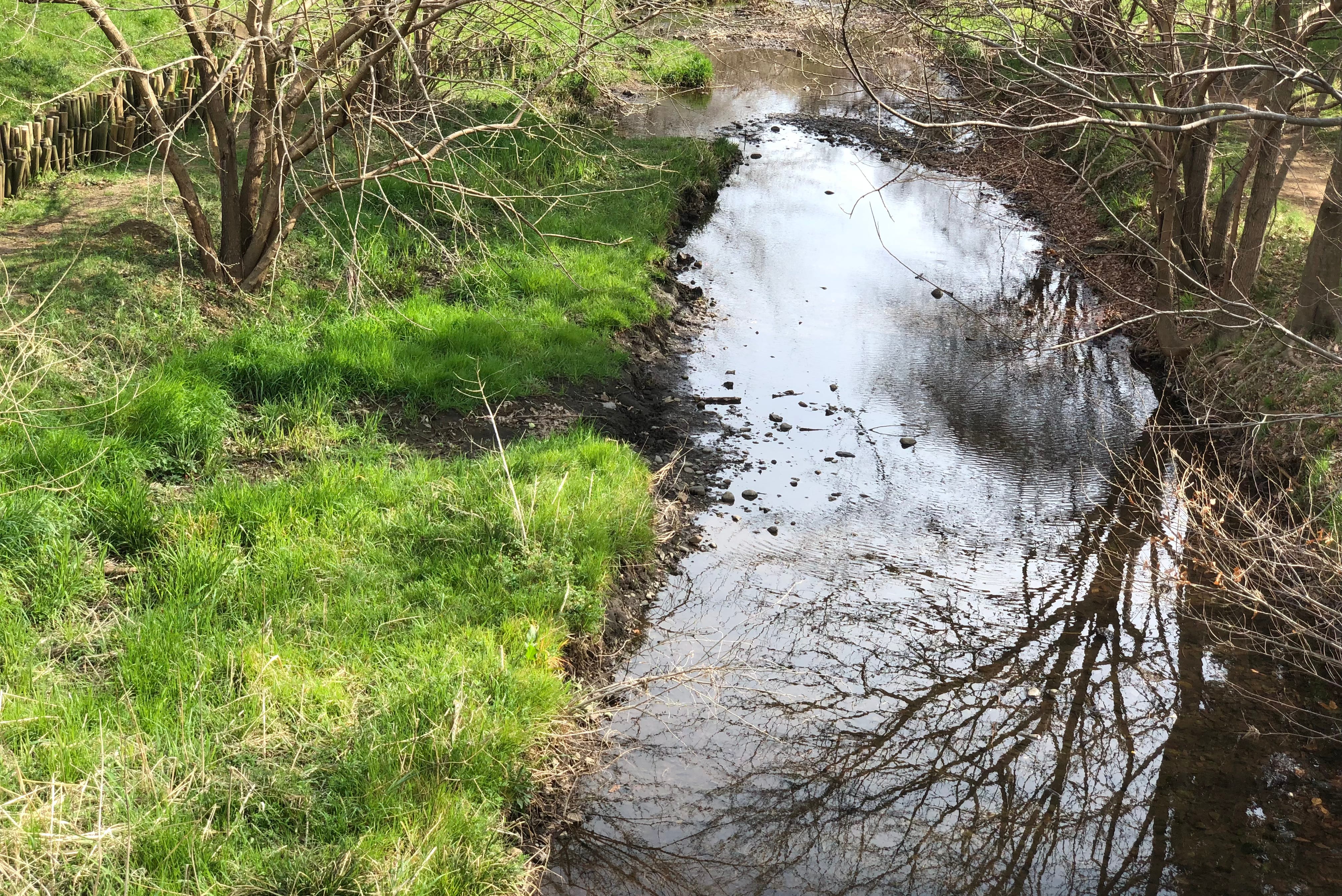
So, where do we find this warmth? We find it in the Soil of our reality.
The great Japanese philosopher, Daisetz Suzuki, in his book Japanese Spirituality, spoke of “Daichisei” (Earthiness). He wrote: “Spirituality never departs from the earth.”
True spirituality is not found in the sky, nor in abstract concepts. It is found in the dirt under our feet—in the gritty, sometimes painful reality of our daily lives.
Historically, Japanese spirituality awakened when monks left the sophisticated capital (the “Sky”) and lived among the farmers, touching the earth (the “Soil”).
“An-Yo” is the act of stepping off the ice of ideals and returning to the Soil.
In Buddhism, we speak of the “Six Realms” of existence. These are not just mythological places, but psychological habitats.
Some realms are pure suffering (Hell), where the gravity of pain is too heavy to move.
Other realms are pure pleasure (Celestial Realm), like a frictionless surface where we simply slide in comfort, unable to gain traction.
The Human Realm is special because it is in the middle.
We are not crushed by gravity, nor are we sliding on ice. We stand on the Soil.
We have enough pain to feel “Discomfort,” but enough freedom to “Change.”
This specific mix is what gives us the rare opportunity to tune our vector. This is why we call our existence a “Precious Human Life.”
Acknowledging the Soil does not mean uncritically accepting a painful status quo.
The “Discomfort” you feel in your current Habitat is not a weakness; it is the vital signal—unique to humans—that urges you to seek a better place.
We ground ourselves not to give up, but to use this precious friction to move forward.
3. Vector Thinking: The North Star
Once we find traction, we can move. But which way?
We do not need a rigid “Goal” (a fixed point to conquer). We need a “Vector” (a direction).
In Jodo Shinshu, the Pure Land (Jodo) acts as our North Star.
We may never physically reach the North Star. It is an unattainable ideal.
But because it is unattainable, it serves as a permanent reference point for our Vector.
We use our plasticity to constantly “Tune” ourselves towards this light. This endless process of micro-alignment is what we call the “Middle Way.”
4. 1-Day Ego: Leaving a Wider Canvas
And here is a perspective that anchors me.
On this vector pointing to the future, “Tomorrow Morning” lies in the exact same direction as the “Pure Land.”
I once asked Audrey Tang, “Do you have an ego?” She replied, “I have a 1-Day Ego.”
She resets her ego every night, dying to yesterday and being reborn to today.
This concept is deeply rooted in the philosophy of being a “Good Ancestor.” It is not about self-optimization; it is about stewardship.
If we live with this 1-Day Ego, the person waking up in your bed tomorrow is not “You,” but a “Future Generation” inheriting your body.
Our task today is not to finish the painting. It is to use our limited energy to clear the clutter of our Habitat and leave a “Wider Canvas”—a cleaner, more open space—for that stranger arriving tomorrow.
Conclusion: A Monk’s Well-being
I am not an enlightened monk living deep in the mountains. I am a secular monk, living in the city, wrestling with the messiness of life, just like you. This “secular” stance is partly intentional, but mostly inevitable. To be honest, I do not have the capacity to live otherwise. I am a lay person who cannot help but hold close those who are special to me—my family and friends. Consequently, this way of being becomes a practice of Suzuki’s “Earthiness”—finding the sacred not in a secluded temple, but in the soil of everyday life.
I often fail to control my life. I often lose my way. But when I remember to touch the soil of “An-Yo”—when I accept my physical limits and remember the Habitat that sustains me—I feel the tension drop from my shoulders. I feel a slight shift.
I don’t need to be perfect. I just need to tend the soil tonight. So that maybe, just maybe, the “Me” who wakes up tomorrow can breathe a little easier. That is enough. In fact, I suspect there is nothing more than that.
Finally, if I were to define well-being in my own words, it would be this:
“Well-being is the ecological practice of grounding ourselves in the soil of ‘An-Yo’—a safe habitat that accepts our physical limits—and using our subtle, humble, and precious agency to continuously tune our vector toward a ‘Wider Canvas’ of infinite potentiality.”
Beautiful piece! I like your “We are software and we are also hardware” analogy and the reminder that true spirituality is found in the sometimes painful reality of our daily lives.