

Previously, I had the opportunity to speak with the British Buddhist thinker Stephen Batchelor. I find much to resonate with in his way of “translating” Buddhism—born out of his perspective on Secular Buddhism, a form of Buddhism that steps away from overt religiosity. His work continually offers essential insights, both for re-examining contemporary Japanese Buddhism and for imagining how people may relate to Buddhism in the future.
During one of our earlier conversations, Batchelor showed particular interest in the expression “Ambient Buddhism,” which I had used to describe Japanese Buddhism. He asked me to share more about what I meant. Since this was a good opportunity, I decided to gather some of the thoughts I have written, spoken about, and felt over the years—and share them here.
Japanese Temples Are Two-Story Structures
Japanese Buddhism—like many other religious traditions—uses a wide range of metaphors to describe the nature of this world and to invite people into a shared worldview. It has long been embraced both as a philosophy that asks how we should live (the Buddhist path) and as a lamp that illuminates the feet of those seeking awakening or solace. In both senses, one characteristic stands out: in Japanese Buddhism, the presence of the “dead” cannot be separated from the living.
Within the Japanese view of life and death—where the presence of ancestors and the deceased remains vividly felt—Buddhism plays a central role as the place for ancestral memorial practices. Temples and monks have functioned as mediators, connecting the living with those who have passed on.
This characteristic becomes easier to understand when framed through the metaphor of “Japanese temples as two-story structures.”
The first floor is the space for mourning practices: it is where the deceased are cared for through funerals, memorial rites, and ancestral observances. The second floor is the space of learning: a place where those who are alive inquire into the Buddhist path.
In recent years, as Buddhist values have begun to receive renewed attention, people’s interest has increasingly shifted toward the “second floor.” Yet nearly all of Japan’s roughly 70,000 Buddhist temples still rely on the activities of the “first floor” as their foundation. Day after day, Japanese temples stand at the threshold between life and death—conducting funeral services, memorial ceremonies, and caring for family graves.
In doing so, temples have also upheld Japan’s traditional household system by connecting life and death through the family unit, known as the danka (parish family) system. This has long been one of the temple’s essential social functions.
Living in Japan Means Living with the Unseen
If we return to the teachings of the Buddha, the emphasis would rest not on how to treat the dead but on how we live this life—on the path of practice and inquiry known as the Buddhist Way. In recent years, with the growing popularity of mindfulness, more people have begun learning Zen practices. Yet looking back across Japanese history, the everyday life of ordinary people has not included habits such as zazen or meditation. Instead, Japanese people have related to Buddhism in ways quite different from these formal practices.
Old tales and folktales—stories once passed down through voices—are now gradually being confined to books. But even until relatively recently, Japanese daily life involved encounters with “unknown” or “unseen” beings: personified figures such as demons and yōkai, animals that appeared in human form, and the sacred presences (kami) believed to dwell in all things. These were not considered strange but were woven naturally into the rhythms of life.
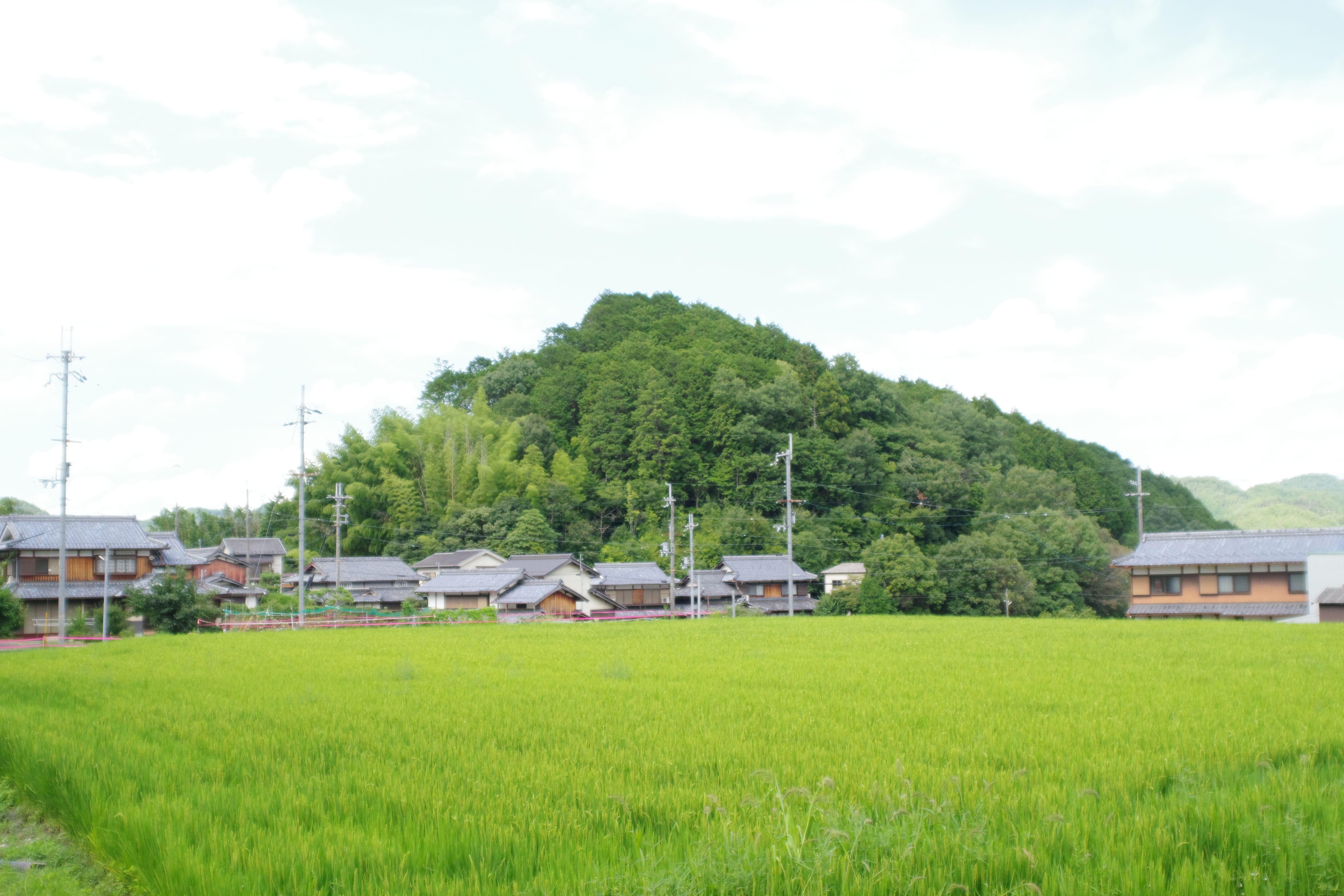
Anyone who has lived in Japan, or who has traveled its regions on foot, has likely come across countless access points to such beings—small shrines, roadside markers, folktale landscapes, community rituals—quiet invitations to step into a world where the boundary between the visible and invisible is thin.
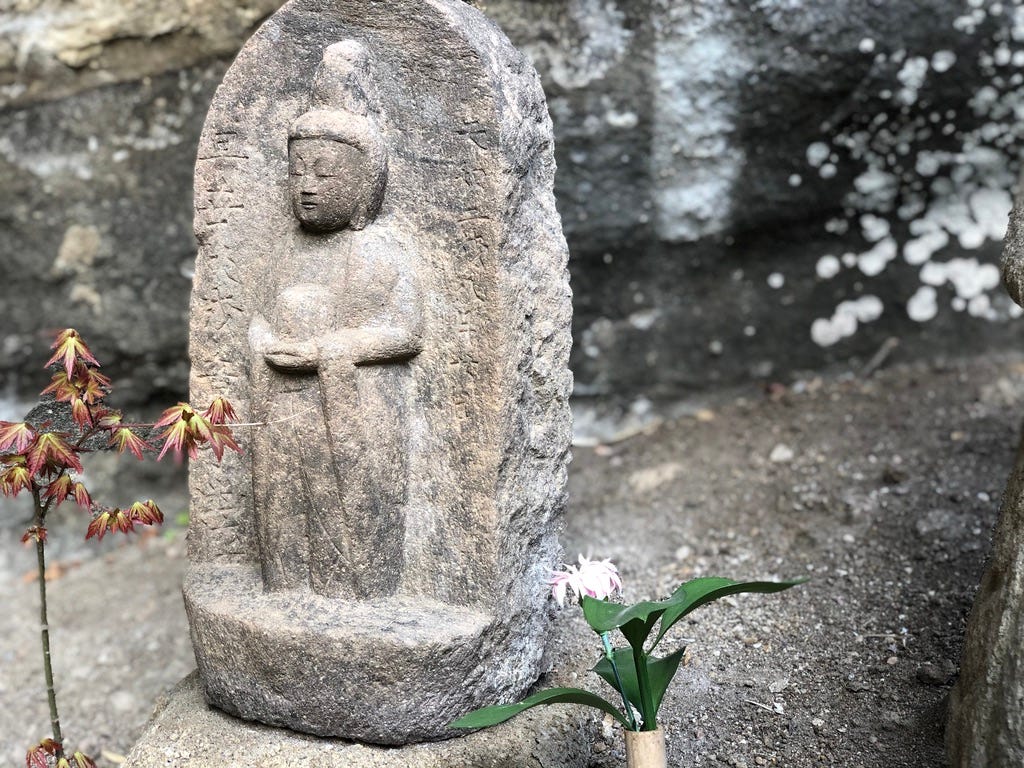
In almost every settlement in Japan, one finds a shrine or temple nearby. Mountains, trees, and stones have long been regarded as yorishiro—places where divine spirits may dwell. Rivers and valleys, meanwhile, have traditionally been seen as thresholds that connect “this side” with “the other side.” In the cities, many of these features have disappeared, yet even today one still encounters jizō statues or dōsojin guardians along street corners, and in the mountains countless small shrines and stone Buddhas line the paths.
These sites are seldom abandoned. Someone—often anonymously—tends to them, offering flowers, food, or coins. Inside homes, too, many people maintain a Buddhist altar or a Shinto kamidana, or some personal substitute that serves a similar purpose. It is not unusual for Japanese living spaces to include a place set aside for the invisible.
For first-time visitors to Tokyo, I recommend going up Tokyo Tower. From that height, you will be astonished by how many cemeteries lie scattered across the city—an unexpected sight in a metropolis of such scale.
People in Japan have long lived in environments where the “unknown” and the “unseen” are quietly perceived, feared, revered, and approached with folded hands. The specific forms of these presences differ across regions and traditions, but one element is consistently present: the presence of the dead. This way of living—“dwelling alongside shapeless beings, allowing oneself to dissolve gently into ambiguity”—reflects a view of life and death in which daily life already carries a Buddhist texture. Everyday routines themselves become a blend of ancestral remembrance and the Buddhist path.
It might even be called a form of Buddhism that precedes what we usually think of as “religion.”
Perhaps this is what we could describe as Ambient Buddhism—a Buddhism woven seamlessly into the atmosphere of ordinary life.
This environmental form of faith is also transmitted environmentally. There is no single authoritative text or fixed doctrine that people must consult. Instead, these sensibilities have been passed down through customs, stories, and local practices—changing shape according to their surroundings as they move from one hand to the next. This, perhaps, is why many Japanese find it difficult to answer clearly when asked about their religion.
And yet, just as our skin naturally absorbs the moisture in the air, or our bodies take in the minerals dissolved in hot spring water through our pores, we, too, have absorbed Buddhism—and many nameless forms of faith—from the climate and soil of the places we live. In this way, we have lived not apart from these faiths but intertwined with them.
The Way of Living as an Ambient Buddhist
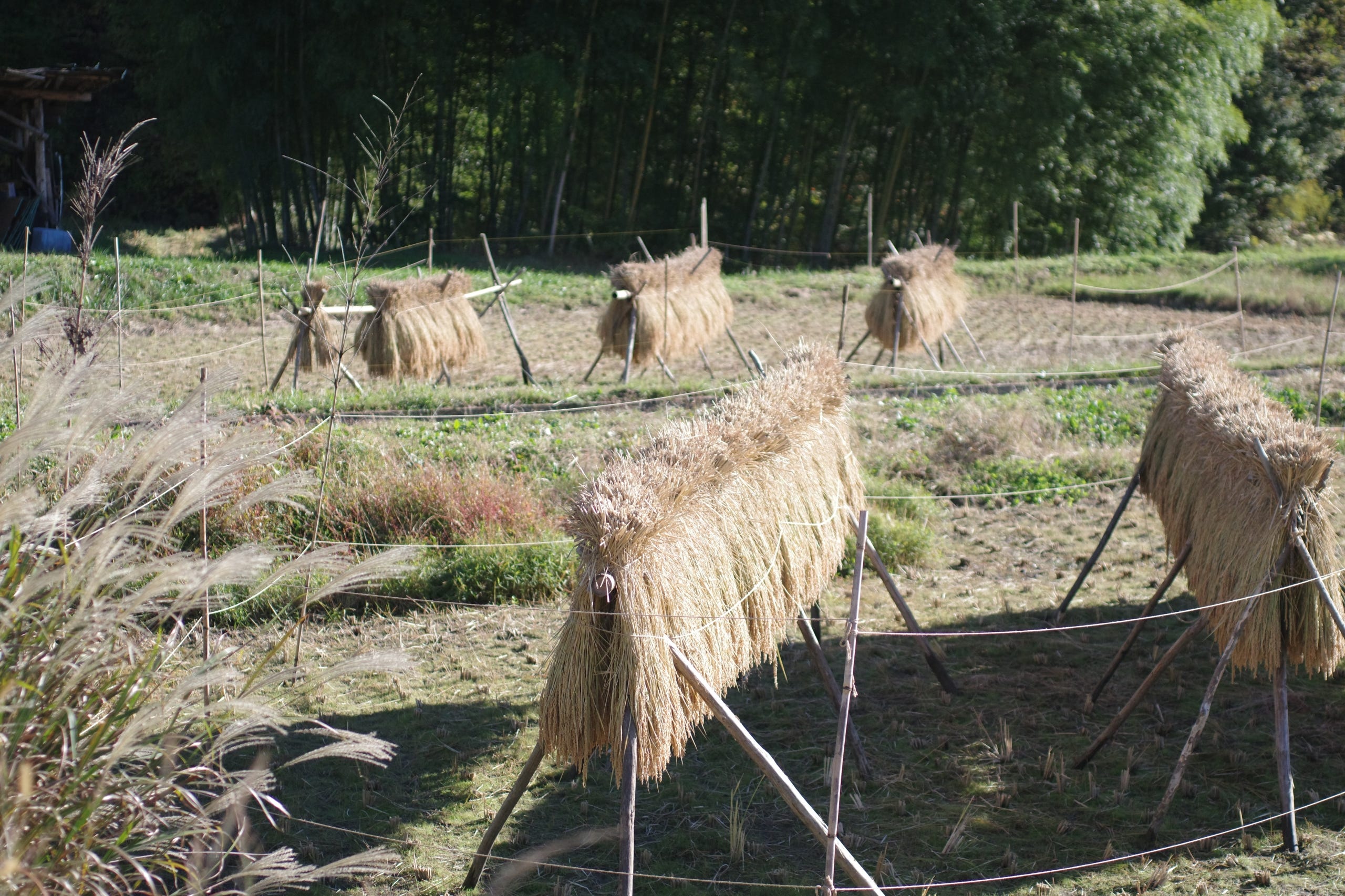
Growing rice, receiving the lives of animals with gratitude, tending landscapes.Braiding straw, spinning fiber, hand-making papers. Preparing miso(fermented soybean paste), brewing sake, cleaning one’s home. Aligning communal rituals with the movements of the heavens and the rhythms of field and season---people’s lives as part of nature giving thanks for blessings, and revering death.
When a person dies, the deceased returns to the mountains, rivers, soil, and grasses—the Pure Land woven into the natural world. They watch over the next generation and, at the same time, become part of the very activity that sustains life. Ambient Buddhism is the practice of living and dying itself.
In these ways of life—many of which we gradually released in the process of modernization—there were prayers, meditations, and rituals. And thankfully, no matter how much time passes, there are still people who carry these traditions forward. It has not yet been lost. We are welcome to learn how things are sustainable in the way of nature.
In Zen, the Buddhist path is often described through the three trainings—śīla(戒), samādhi(定), and prajñā(慧). If this were a tree, the roots would be our habits and disciplines (śīla:戒). The trunk is the collected, steady mind cultivated through mindfulness (samādhi:定). Only when the roots are firm can the trunk grow strong and bear fruit (prajñā):慧. In this sense, Zen is essentially a habit in daily life that is in line with nature: all aspects of daily living, every moment, are themselves the practice
This ambient, unbounded form of faith—too fluid to be contained neatly within the category of “religion”—has long shaped the Japanese view of life and death. It has created an environment that allows differing elements to mingle without forcing their distinctions to harden. It is, in a way, a world encompassed by the “sound” that the Buddha is said to have transmitted beyond words.
Ambient Buddhism is like living within the Dharma without ever noticing it. A faith that does not sharply divide inner and outer, but instead exists as part of the surrounding environment—drifting and circulating like water within our bodies and throughout the world, often without our conscious awareness.
In this sense, the “intentional” mindfulness practices that so many companies have adopted today can be seen as a distinctly contemporary approach to Buddhism—one more way, suited to our era, of forming a connection with the Dharma.
Practices Mediated by the Dead — “Good Enough Ancestors”
In 2021, I had the privilege of translating Roman Krznaric’s book The Good Ancestor into Japanese.
A hundred years from now, nearly all of us who are alive today will have completed our lives and become ancestors. When that time comes, how will we be perceived in the hearts of future generations? This question is, in essence, identical to asking how we ought to live now. How do we pass the baton we have received from the past on to the future? To reflect on the ancestors who lived before us is also to reflect on ourselves—because we, too, will become ancestors in time. It becomes a practice of examining how we stand in the present moment.
To be able to end one’s life thinking, “I lived good and full enough” may be one path toward becoming a “good ancestor.” Here we find a form of mindfulness that permeates daily life, mediated through the presence of the dead. This, too, is a mode of Ambient Buddhism.
Within Ambient Connections
In Japanese, there are two words that correspond to “ancestor”: 先祖 (senzo) and 祖先 (sosen).
In translating The Good Ancestor, I chose 祖先(sosen), because senzo carries a stronger connotation of bloodline or genetic lineage, whereas sosen is open—it does not restrict itself to kinship, nor even to the human species. It suggests a vast collective of the dead, transcending all borders.
In truth, we live sustained by countless ancestors, receiving countless forms of benefit from them. Buddhism teaches the importance of the saṅgha, the community, yet the saṅgha is never a closed category. Anyone walking the Buddhist path—regardless of nationality, ethnicity, gender, or ability—is part of the same family. This openness itself was one of the Buddha’s central messages.
There is the saṅgha of those living together in the present, but there is also a saṅgha that extends across life and death, across species, across time. The innumerable ancestors embedded in our environment are a generous and dependable saṅgha with whom anyone can walk.
From senzo (先祖) —ancestors confined within limited relationships—
to sosen (祖先) —ancestors as an environmental, boundless presence.
Within this ambient web of connection, we receive together, cultivate together, and eventually let go together. This vision will become increasingly important.
It marks a movement away from a society built on the axis of “individual × ownership × responsibility”—the very triad that has long underpinned capitalist economies.
Freedom From the Self, Mindfulness for the “We”
According to Zen priest, “the direction of meditation and zazen is toward freedom from the self.” Freedom from the self means freedom from the attachment that tries to grasp and define “me”—and all the relationships that include me. Mindfulness is not a tool for suppressing stress, nor an escape from reality. Such temporary effects may indeed arise, but the essential question is how we live our everyday lives.
If mindfulness becomes a method for the “I” to acquire something, it begins to drift away from the very heart of Zen.
In a world that has long sought certainty through greater material accumulation and ever-more refined strategies, we are now seeing the limits of endless growth. Many people already sense that richness and happiness cannot be measured by belonging or income. Ideas of community—nation, society, family—will surely undergo further renewal. Well-being and mindfulness, too, are shifting from “me” to a more open “us,” deepening the exploration of ways of being that cross borders and extend into the plural.
The unnamed, unseen presences that we intentionally leave unspoken—held in their ambiguity—form a kind of faith that permeates us unconsciously, like minerals entering the body through our pores. This “environmentally given faith,” absorbed without our noticing, may be an intangible legacy that binds us together as beings who live across time and space.
Thoughtfully written! I like your perspective of living with the unseen and unknown. And a good reminder that "All aspects of daily living, every moment, are themselves the practice."